Opening The Rift
therift
© 2026 The Rift. All Rights Reserved.
Linking Improvements in Family with Wider Community and Social Improvements
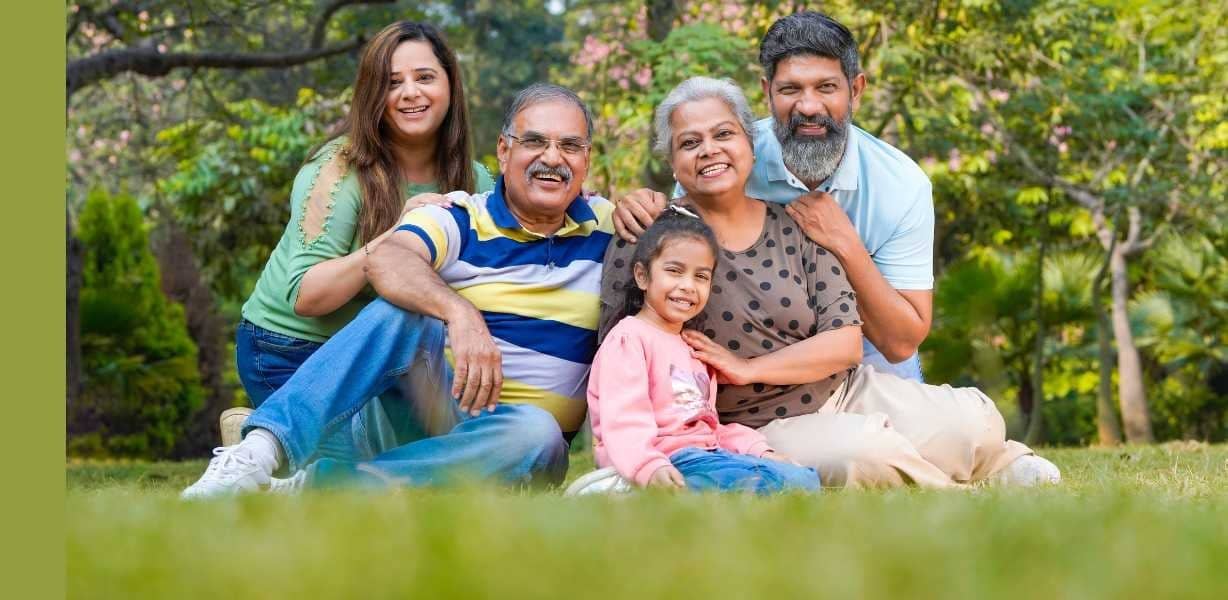
To achieve better results, we argue here that the efforts to protect and improve families should be better integrated with wider efforts to improve communities and social relations.

Key Takeaways
1 of 3
Automatically generated. Read full article for complete context.
There has been a lot of concern in recent decades relating to the breakdown or disintegration of families. While a huge data base on this exists and there has been a lot of research, it has not been possible generally to achieve any significant success in improving the situation or in checking the disturbing trends. To achieve better results, we argue here that the efforts to protect and improve families should be better integrated with wider efforts to improve communities and social relations. The kind of values that are needed to improve social relationships are more or less the same as those needed for improving family life.
In the USA and in several leading European countries, recorded divorces in a typical year are 40 to 55% of recorded marriages. In China also divorce to marriage ratio is about 44% while in some of its urban centers this may cross 50%. In Japan this is about 35%.
There is less accurate but more anecdotal evidence of divorces and separation being accompanied by a lot of fighting. Beyond divorce data there are many indications of repeated discord. This has happened despite increasing evidence and warnings that domestic discord and violence, followed by divorce and separation, can have very serious adverse impacts on children, resulting in emotional and mental health problems which can continue into later years, resulting in more extreme cases in self-harm and attempts of self-harm.
Due to breakdown of relationships or reluctance to enter into them or for other reasons (sometimes just a matter of personal choice) the tendency of living alone has increased fast in several societies. In USA and UK single persons households are now about 30% of all households, in European Union and China this is about 20%. In Japan the number of single person households is about 36%, and this trend is further increasing.
In 2018 U.K. became the first country to appoint a minister to tackle increasing loneliness. Around the same time studies had pointed out that nearly 200,000 elderly people living alone here had not spoken to any friend or relative for a month. Surveys linked loneliness not just to depression but also to increasing the risk of heart attack, stroke and dementia. Doctors said they saw one to five patients per day troubled by loneliness.
Later with the much discussed appointment of Tetsushi Sukamoto Japan became the second leading country to appoint a minister for checking loneliness. Over half a million people, 541,000 to be precise, had been identified in Japan as hikikomoriHikikomoriA psychological condition and social phenomenon in Japan where individuals completely withdraw from society, often confining themselves to their homes for extended periods.—social recluses who withdraw from all social contact, sometimes for years, confining themselves just to their home. One important cause of this has been stated to be the pressure of too many expectations in academic and professional life.
A survey made by a technology company Kaspersky found that nearly 55% of the Japanese reported to be affected by loneliness even before the COVID pandemic. Social capitalSocial CapitalThe networks of relationships among people who live and work in a particular society, enabling that society to function effectively. refers to trusted social network and ties. In a Legatum Institute study of social capital, Japan was ranked as low as 132 among a total of 167 countries.
Increasing concern has been expressed here particularly regarding loneliness among younger people, including teenagers, and its disturbing linkage to high incidence of self-harm. Linkage of loneliness and self-harm has been particularly worrisome in the age-group up to around 40 or so. This breaks the myth of loneliness as a serious concern being confined mainly to the elderly.
In the USA a survey by Cigna found that almost half of the adults admitted feeling lonely sometimes or always. This has been linked to serious health problems. A study by Kassandra Alcaraz based on records of over half a million persons found high risks of premature death. Dr.Nicole Valtorta found 30% increased risk of stroke and developing coronary disease, while Florida State University College of Medicine found 40% higher risk of dementia. Already researchers were speaking of an ‘epidemic of loneliness’ even before the appearance of COVID. Loneliness must not be seen not in isolation, but as a part of the wider, aggravating social trends that emphasize more material aspects of life at the cost of relationships, more individual concerns at the cost of social ones, self-centered thinking at the cost of broader engagement with social well-being.
The Global Scale of the Loneliness Epidemic
Single-Person Households
Japan
36%
36%
USA & UK
30%
30%
EU & China
20%
20%
Associated Health Risks
+40%
Risk of Dementia
Risk of Dementia
+30%
Risk of Stroke
Risk of Stroke
VISUALS BY THE RIFT
Such a broad understanding has unfortunately been missing in several well-intentioned efforts which are aimed more at tackling the symptoms rather than the deeper causes of loneliness and of family disintegration, providing some immediate relief rather than durable solutions.
One can only hope that with better understanding of not just the seriousness but also the various broader dimensions of family disintegration and loneliness, more durable solutions will soon start getting more attention. For this it is important to emphasize simple social values which can be easily understood by everyone and at the same time are capable of big changes. We can think of some very simple but significant values—
- As far as possible we should try to avoid causing distress to anyone.
- We will avoid any violent behavior as well as trying to dominate others.
- We will try to understand other points of view.
- We will strive to be honest and caring in our relationships.
These may appear to be simple messages but truly practicing them in daily life makes a lot of difference in creating a caring world and improving social relationships at all levels, including the closest relationships.
Disclaimer:The views and opinions expressed in this article are those of the author(s) and do not necessarily reflect the official policy or position of The Rift.