Opening The Rift
therift
© 2026 The Rift. All Rights Reserved.
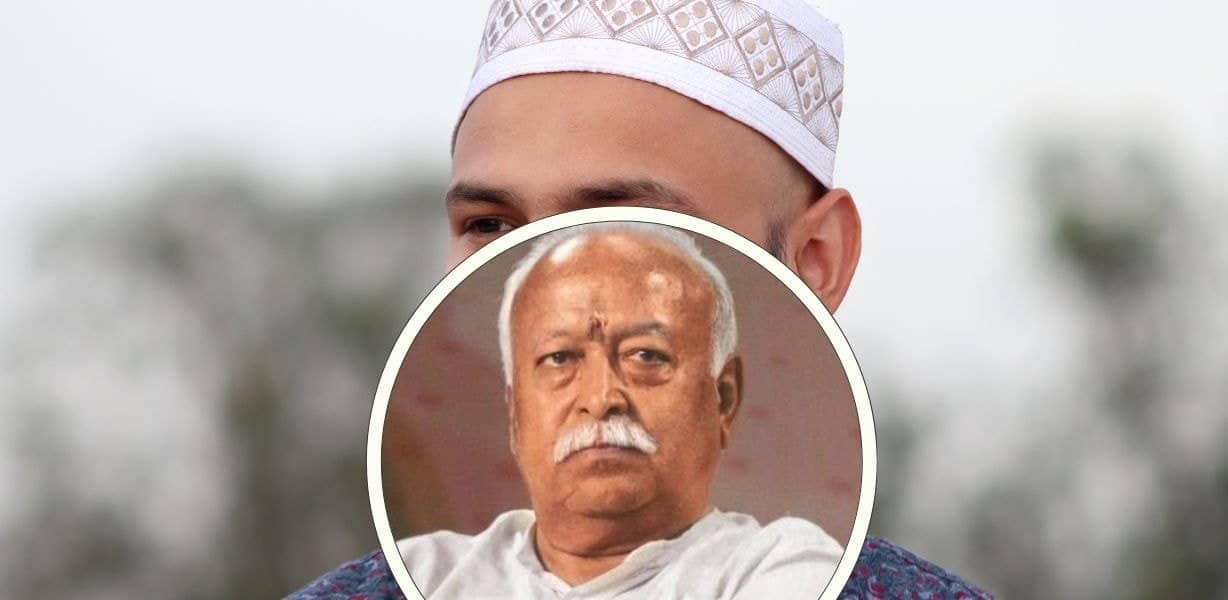
Mohan Bhagwat’s Statement: A Facade or a New Way Forward for Indian Muslims?
After profound wounds from historical events and ongoing violence, on what basis can Indian Muslims trust them? This remains a critical question.

Key Takeaways
1 of 3
Automatically generated. Read full article for complete context.
The recent statement by Mohan Bhagwat at Madison Square, asserting that “Hindus who think that Muslims cannot live in India are not Hindus,” has once again become a subject of discussion among people. The fact that such a statement has come from the chief of the RSSRashtriya Swayamsevak SanghA right-wing Hindu nationalist paramilitary volunteer organization in India, widely considered the parent organization of the ruling Bharatiya Janata Party., whose ideological thinking has historically been perceived as against Muslims or Abrahamic religions, appears surprising at first sight. When an organization that has consistently pursued a Hindutva agenda suddenly makes such a statement, it prompts reflection. In my opinion, some aspects of this matter need to be considered carefully.
The first question is whether the organization is changing its basic principles and developing a new vision for India.
The second question is whether Mohan Bhagwat’s statement is merely an attempt to present a different image of the organization to the international community.
The third question is what Mohan Bhagwat’s statement means for Muslims and how they should respond to the matter.
If we consider these points one by one, we first understand that the RSS believes its ideological foundation is to save and ‘protect’ Hindu society, as it defines it. Followers of Abrahamic religions are often viewed as individuals who can never be fully integrated into this campaign. This includes Muslims—because of their large population and their cultural, linguistic, and architectural influence on India for centuries—and Christians, who are seen as people who convert others, such as Hindus and tribal people of central India, to their religion. In such a situation, a statement like this about its most prominent opposing group appears very surprising. It seems to be a statement primarily intended for international optics.
The second point is that the program where Mohan Bhagwat made these statements is, according to media reports, part of a series of events organized to mark the RSS’s centenary. This means that Mohan Bhagwat is travelling to different places to connect with the people of the organisation. Therefore, he tailors his speeches at each event, considering its specific identity and the significance of the venue. It appears that since the Madison Square program’s importance, large scale, and global platform, it was deemed an opportune moment to address international allegations against the RSS—namely, that it is anti-minority, anti-Muslim, and responsible for the killing of Muslims in India. That is why, by presenting these points on an international stage, he has, in a way, attempted to offer an explanation. This is another example of the practical approach that the RSS teaches its people. The RSS trains its members to be pragmatic—to speak sparingly when necessary and, when deemed beneficial, to enhance its public image and influence.
The third point is that to understand what this statement means for Muslims, we need to look again at historical events. For the RSS, the biggest issue in this country was the construction of the Ram Temple at the site of the Babri MasjidBabur’s MosqueA mosque in Ayodhya, India, built in the 16th century, whose demolition in 1992 sparked widespread communal violence and a long-standing legal dispute over the site.. The Rath YatraChariot JourneyA Hindu procession involving chariots, often used in a political context in India. Notably, L.K. Advani’s 1990 Rath Yatra aimed to mobilize support for the construction of a Ram Temple at the Babri Masjid site. carried out for the demolition of the Babri Masjid and the riots that followed left a deep wound on Indian Muslims. After this, the Muslim community could never develop trust in this organisation.
The scars of the severe anti-Muslim riots that occurred in Gujarat in 2002 during Narendra Modi’s tenure as Chief Minister are still evoked by the name of Bilkis Bano, and resurface whenever Ehsan Jafri and Zakia Jafri are mentioned. A documented account of these riots, based on interviews, was presented to the public with great effort by the well-known journalist Rana Ayyub. The book based on this account was reportedly not even allowed to have its launch event in states governed by the BJP. When these matters are brought before the government, it cannot even conceal its complicity. After these profound wounds, on what basis can Indian Muslims trust them? This remains a critical question.
Since 2014, with an RSS-backed government coming to power in India, a relentless series of hate speeches, violence, and killings against Muslims and minorities has continued. This series, which began with the killing of Mohsin Shaikh in Pune, Maharashtra, extended to Akhlaq, Afrazul, Nasir, and Junaid. Even today, almost daily, attacks by Hindutva groups fueled by hatred towards Muslims are reported across the country. In most cases, those implicated are associated with Hindutva groups supporting the Sangh. Crucially, the underlying hatred driving these ongoing killings and incidents of violence can often be traced back to this organization itself.
In the end, the Sangh and its people carry out such activities mainly to create an image and demonstrate a practical approach. After 2002, when the government and the Sangh faced international criticism and their global reputation suffered, the Muslim Rashtriya Manch was established. was established. Today, it is undeniable that individuals leverage it to secure positions within the Sangh or the government. Even today, the RSS continues to adhere to the same ideological tenets it has publicly declared.
In 2014, as elections approached, major media channels and analysts published articles attempting to explain that this was not the Sangh’s ‘Gujarat or Babri-era’ party, or that Muslims should trust the BJP and align with it. The results are evident, and it is for the reader to discern what Mohan Bhagwat’s recent statement truly indicates.
Disclaimer:The views and opinions expressed in this article are those of the author(s) and do not necessarily reflect the official policy or position of The Rift.