Opening The Rift
therift
© 2026 The Rift. All Rights Reserved.
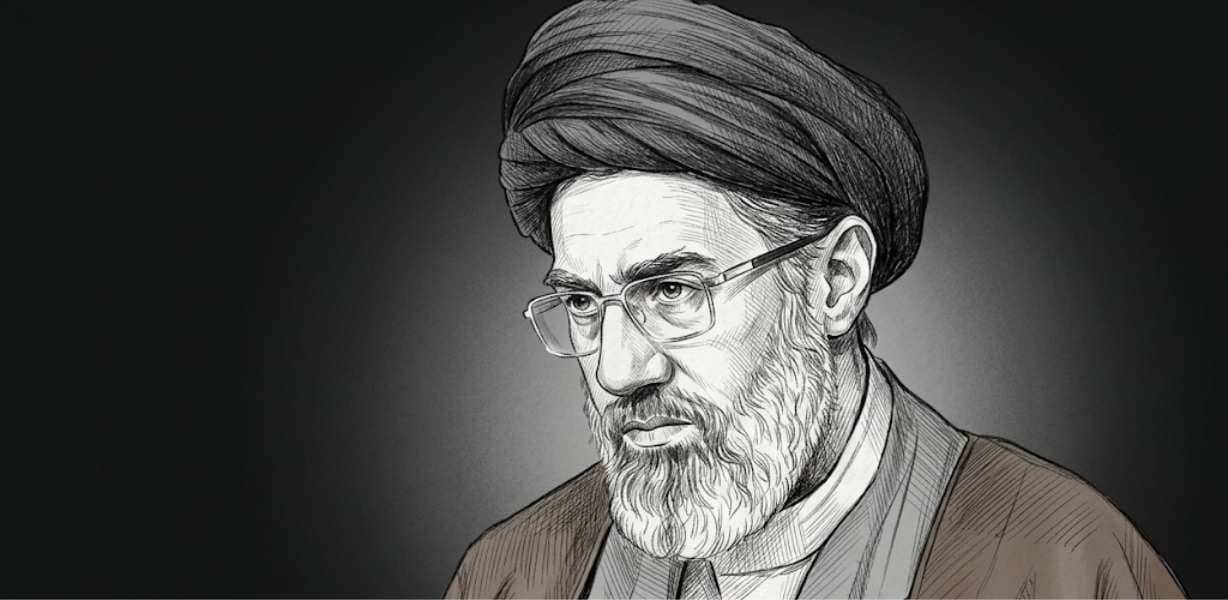
Who is Mojtaba Khamenei? Iran’s New Supreme Leader
A straightforward explainer on Mojtaba Khamenei, Iran’s new supreme leader, detailing his history as an administrator and his connections to the military.

Key Takeaways
1 of 3
Automatically generated. Read full article for complete context.
Iran which is under a foreign attack has managed swiftly to elect the new supreme leader. The new supreme leader Mojtaba Khamenei has officially succeeded his father, Ayatollah Ali Khamenei. The 56-year-old was chosen for this role following a military strike by the United States and Israel that martyred his father, as well as his wife, his mother, and his sister. Mojtaba himself survived the attack because he was not at the compound when it happened.
For people outside of Iran, and even for many ordinary citizens inside the country, Mojtaba is not a very well-known figure. Unlike modern politicians who use television and social media to connect with the public, he has spent his entire career working quietly inside government offices. However, as the country faces serious military pressures from outside forces, the government quickly selected him to ensure that the country’s daily operations remain stable. This article explains who he is, how the Iranian government works, and what his new job actually means.
What Does the Supreme Leader Do?
To understand Mojtaba’s new role, it helps to understand how the government of Iran is set up. In the United States or the United Kingdom, the president or prime minister is the most powerful person. In Iran, the most powerful person is the supreme leader. The supreme leader has the final say on every important decision in the country. He is the ultimate commander of the military, and he sets the general direction for the country’s foreign policy and economy.
Mojtaba Khamenei is only the third person to hold this job since the country’s current government system was created in 1979. Because the supreme leader has so much authority, his background tells us a lot about how he might handle the country’s problems. Interestingly, Mojtaba has never been elected by regular voters. Instead, he built his career as a trusted administrator and a behind-the-scenes manager for his father.
For many years, US diplomats have described his past role as acting as a “gatekeeper”. This means that anyone who wanted to talk to the top leader, or any paperwork that needed to be signed, normally had to go through Mojtaba first. By doing this job for decades, he learned exactly how every part of the government functions, and he built strong relationships with very important people in the military and the government.
How Was He Chosen?
The supreme leader in Iran is not chosen by an open public election. Instead, a special group of 88 religious scholars, called the Assembly of Experts (Majles-e Khobregan-e Rahbari), decides who will take the job. When the recent military strikes happened, this assembly held a quick meeting. They chose Mojtaba through a “decisive vote” to ensure there was no confusion about who was in charge.
This decision was very interesting to people who study Iranian laws. According to the country’s rules, the supreme leader is supposed to be one of the highest-ranking religious scholars in the country. Right now, Mojtaba is considered a mid-ranking cleric, rather than a top-level scholar. However, the Assembly of Experts decided that his practical experience in running the government was more important than his academic title during a time of national emergency. A similar adjustment was successfully made when his father took over the position back in 1989.
Some international experts note that passing the leadership directly from father to son looks a lot like a royal family passing a crown. This is notable because the government created in 1979 was meant to be completely different from a theocratic dynasty or a traditional monarchy. However, the Iranian leaders who made the decision clearly believed that Mojtaba was the most capable person for the job, mainly because he already understood the country’s complicated security systems.
Connections to the Military
One of the biggest reasons Mojtaba was chosen is his strong relationship with Iran’s military forces. Specifically, he is very close to a powerful group called the Islamic Revolutionary Guard Corps, or the IRGC. His connections started back in the 1980s when he was a young man. During the long and difficult war between Iran and Iraq, he served as a soldier in a unit called the Habib Battalion.
Many of the other young soldiers who served next to him in that battalion eventually became high-ranking generals and security officials. Because they spent time together on the battlefield, there is a strong sense of trust between him and the military leadership. During a time when Iran is facing serious military threats from other countries, having a supreme leader who fully trusts his generals, and who is fully trusted by his generals, is considered essential for national security.
In his previous administrative roles, some groups claim he has been involved in using police and military forces to manage large protests inside the country. For example, he violently suppress protests which occurred in 2009 after a controversial election. While government officials state that tight security is sometimes necessary to keep the country safe and stable, international human rights groups have often criticized the strategies the government used to keep public order. Still, for his supporters within the government, his actions show that he is willing to make tough decisions to keep the country unified.
Managing the Country’s Wealth
Running a country requires more than just military strength; it also requires money. Iran’s economy is unique because a large portion of its wealth is managed by massive organizations called “bonyads,” or charitable foundations. These foundations run factories, real estate companies, and huge businesses that help fund the government’s activities without needing to be approved by normal politicians.
Reports from international financial experts claim that Mojtaba has played a major role in how these foundations operate. It is said that he has quietly managed considerable assets to ensure that important government programs have the money they need, despite heavy economic punishments placed on Iran by the United States.
There have sometimes been issues inside this financial system. For instance, a major bank called Bank Ayandeh ran into serious trouble with debt and had to be dissolved by regulatory authorities. Because of situations like this, the country has struggled with high prices for everyday goods, which makes life difficult for many normal citizens. Although he has rarely addressed economic plans in public, his long experience working with these large financial groups means he has a firm grasp on how to keep the government’s budget working even during difficult times.
What Happens Next?
The road ahead is not simple. As the new supreme leader, he takes over at a moment when communications are difficult, and the government has even had to temporarily manage information flows by turning off the internet to handle the crisis. Foreign leaders are watching closely. US President Donald Trump recently called him a “lightweight” when speaking about the news, which suggests that international relations will continue to be tense and unpredictable.
One of his biggest responsibilities involves Iran’s science and energy programs. Specifically, he now has the final say over the country’s supply of enriched uranium. This is a very sensitive topic around the world because uranium can be used for energy, but it can also be used to build weapons. Every decision he makes regarding this material will have huge impacts on how the rest of the world treats Iran.
By choosing someone with deep experience inside the government offices and close friendships with the military, Iran’s leaders have chosen the path of stability. The appointment of Iran’s new supreme leader Mojtaba Khamenei shows that the country wants a steady, experienced person in charge who knows how all the gears of the government fit together. While it remains to be seen how he will handle negotiations with other countries or manage the daily lives of Iranian citizens, the government is focusing on keeping the country secure and functioning during a deeply historic time.