Opening The Rift
therift
© 2026 The Rift. All Rights Reserved.
Nuclear Weapons: The Ultimate Killers and the Cruelest Ways to Die
The Survivors Will Envy the Dead—Nikita Khrushchev on the aftermath of a nuclear bomb drop

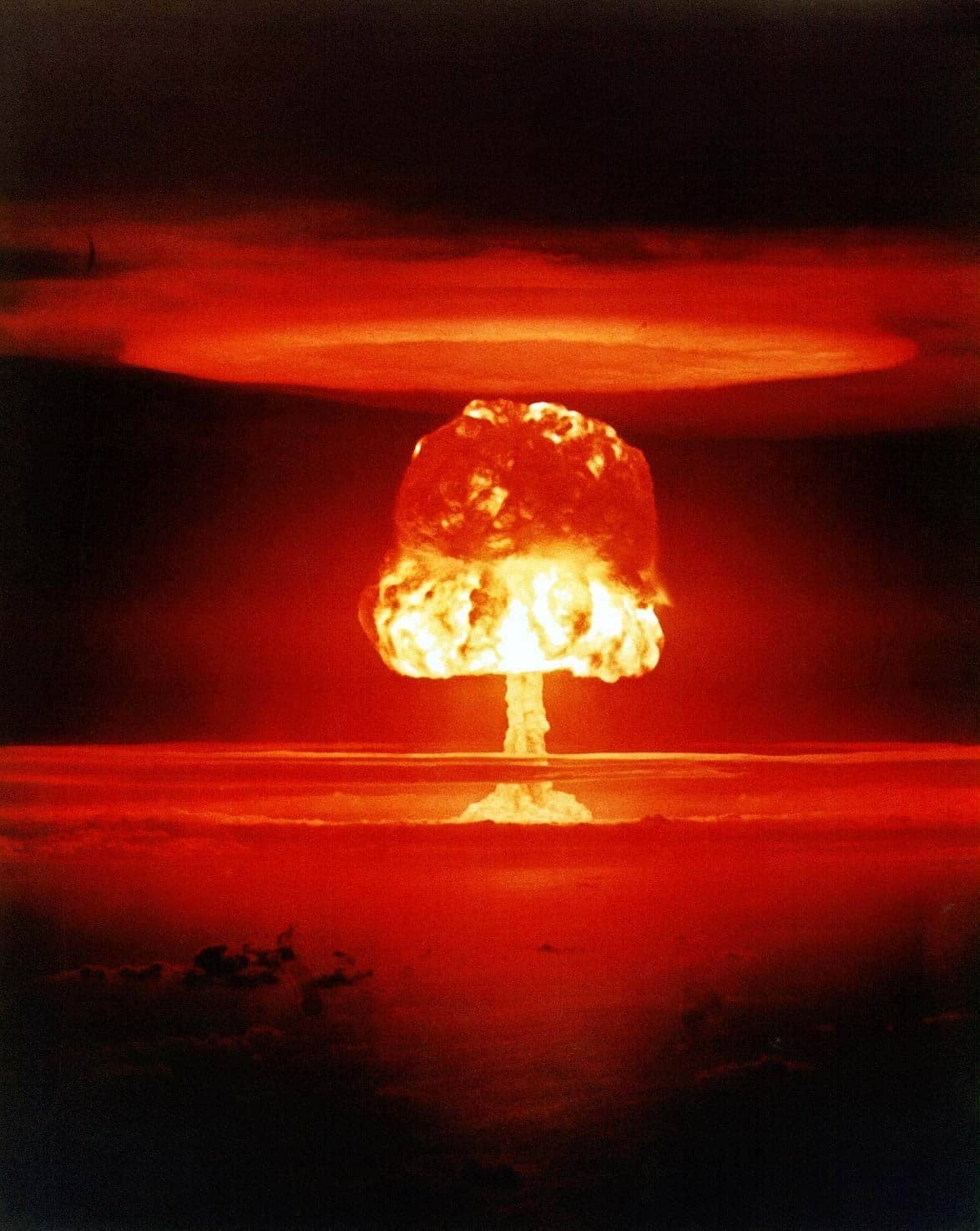
(via Wikimedia Commons)
Key Takeaways
1 of 3
Automatically generated. Read full article for complete context.
Hiroshima, August 6, 1945 : 13-year-old Setsuko Thurlow was buried under the rubble. She was somehow pulled out by a determined rescuer. It was morning but looked like night due to heavy smoke and walking people appeared like ghosts to the bewildered child. Later, she recorded what shocked her about the people she saw: “Parts of the body were missing. Skin and flesh hung from bones. Some were carrying their own eyeballs.”
Father Kleinsorge, a German missionary, heard pathetic voices of people asking for water. When he managed to reach the place from where the voice had come, he saw nearly 20 persons, all of them in similar condition – their faces were wholly burned, their eye sockets were hollow, the fluid from their melted eyes had run down their cheeks.
Temperatures at the hypocenter of the explosion reached double what it takes to melt iron. The face of a schoolgirl sitting almost a kilometer away from this hypocenter was burned beyond recognition. Skin sloughed off scalded bodies, and badly injured, starving people were unable to swallow anything because of the stench of dead bodies. This was the devastation caused by a 12.5-kiloton bomb in Hiroshima, which killed and wounded as many people as a mass raid of 279 aircraft, laden to capacity with bombs, striking a city ten times as populous. of the explosion reaching the double of what it takes to melt iron, the face of a schoolgirl sitting almost a kilometre away from this hypocentre being burnt beyond recognition, skin sloughing off scalded bodies, badly injured starving people unable to swallow anything because of the stench of dead bodies – this was the devastation caused by a 12.5 Kiloton bombKiloton (kt)A unit of explosive power equivalent to 1,000 tons of TNT. The Hiroshima bomb was 12.5 kilotons. in Hiroshima which killed and wounded as many people as a mass raid of 279 aircrafts, laden to capacity with bombs, striking at a city ten times as populous.
Nearly one hundred thousand people were killed within a few minutes in Hiroshima and Nagasaki after being hit by nuclear weapons in 1945, but if we count the longer-term deaths, those caused by internal bleeding, leukaemia, various other forms of cancer, then the death toll is likely to be as high as 3,50,000. In addition, the next generation continued to pay for this cruelty, with children born with mental retardation, physical deformities, and other serious health problems.
Despite the fact that the unacceptably cruel impacts of nuclear weapons were there for all to see, the manufacture of nuclear weapons proceeded at an incredible pace in the post-Hiroshima years. A peak was reached in 1957 when, believe it or not, the USA produced five nuclear weapons per day, totaling 1,841 weapons in a single year. The Soviet Union was desperately trying to catch up and a time when the Soviet Union overtook the USA.
What is more, in 1952, the USA had learned to make the much more destructive thermonuclear weapons (hydrogen bombs). (hydrogen bombs). A hydrogen bomb can kill millions of people when dropped in a densely populated city. Senior nuclear weapon scientists Enrico Fermi and I.I. Rabi were so alarmed by the destructive potential of the new weapons that they declared that they no longer wanted to be a part of all this. In their letter to President Truman, they wrote: “The fact that no limits exist to the destructiveness of this weapon makes its very existence and the knowledge of its construction a danger to humanity as a whole. It is necessarily an evil thing, considered in any light.” Nevertheless, the stocks of the ‘evil thing’ continued to grow. Within seconds, thermal radiation from a 1-megaton nuclear bombMegaton (Mt)A unit of explosive power equivalent to 1,000,000 tons of TNT. A 1-megaton bomb is 80 times more powerful than the Hiroshima bomb. attack in a densely populated area can deeply burn the skin of a million or more people, eventually leading to the death of an overwhelming majority of them. Within 2 minutes of such a detonation, a million people may be dead or dying in very painful ways.
Also, we should not forget that the dangers posed by longer-term impacts are no less than the immediate pain and deaths. This is evident from the highly dangerous plan for targeting the Soviet Union which had been prepared by the USA by 1960 and the projections made for this. This plan was called the Single Integrated Operational Plan (SIOP) for General Nuclear War. The projections for this plan indicated that it was likely to result in the death of about 600 million persons on the other side, but projections of deaths on their own side, should the other side retaliate, were not provided. Projections of deaths on just the other side would have amounted to killing one-fifth of the then-current population of the world. It was projected that out of the 600 million persons likely to die, about 275 million would die within the first day of the very large-scale attacks, while 325 million would die from the radioactive fallout over the next few months. What is more, the latter category would not be confined to just the Soviet Union but would also include many from Eastern Europe and China, and to a lesser extent, Afghanistan, Pakistan, India, and Japan. These projections make it clear that the radioactive fallout can be even more dangerous and painful than the initial highly destructive impact, and can spread to a much wider area. This also implies that two neighboring countries should particularly avoid using nuclear weapons against each other, as under certain conditions, these can cause very serious harm to their own people and soldiers as well.
Projected Casualties: SIOP-62 (1960)
Total Projected Deaths (Opponent Side)
600M
Deaths within First Day (Direct Attack)
275M
Deaths from Radioactive Fallout (Months)
325M
Representing approximately one-fifth of the world’s population at the time.
VISUALS BY THE RIFT
More recently, given the increasing importance of this issue, the famous medical journal \The Lancet\ collaborated with other prestigious journals to write a joint editorial on this subject. This editorial has pointed out, on the basis of studies, that a large-scale nuclear war between the USA and Russia could kill 200 million people or more in the near term and potentially cause a global ‘nuclear winter’ that could kill 5 to 6 billion people, threatening the survival of humanity. This editorial also stated that once a nuclear weapon is detonated, escalation to all-out nuclear war could occur rapidly. This is particularly important to consider at the present juncture, when the risk of actual use of nuclear weapons has increased compared to any other period in the post-Second World War era.
As world leadership does not appear to be fulfilling the trust reposed in it for protecting us all from the worst possible destruction on Earth, it is time for people worldwide to come forward to make the peace and disarmament movement so strong that leadership also comes under increasing pressure from people to move towards a path of a safer present and future. In the vision of the peace movement, one of the topmost priorities should be for the elimination of nuclear weapons as well as for the elimination of all weapons of mass destruction.
Disclaimer:The views and opinions expressed in this article are those of the author(s) and do not necessarily reflect the official policy or position of The Rift.