Opening The Rift
therift
© 2026 The Rift. All Rights Reserved.
Pluralism, not Secularism, is the Future of India’s Diversity
Is there genuinely a threat to minorities from Hindu assertiveness? Hindu majoritarianism is pluralistic because Hindu ethos is fundamentally pluralistic. The Hindu worldview grasps reality simultaneously as one and the many.

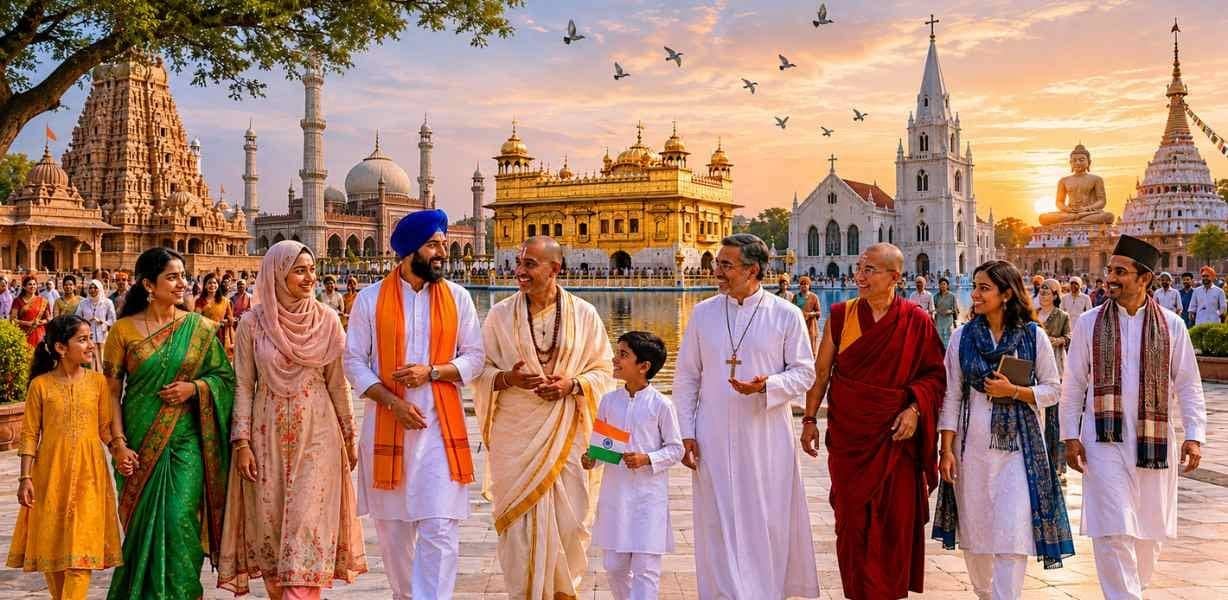
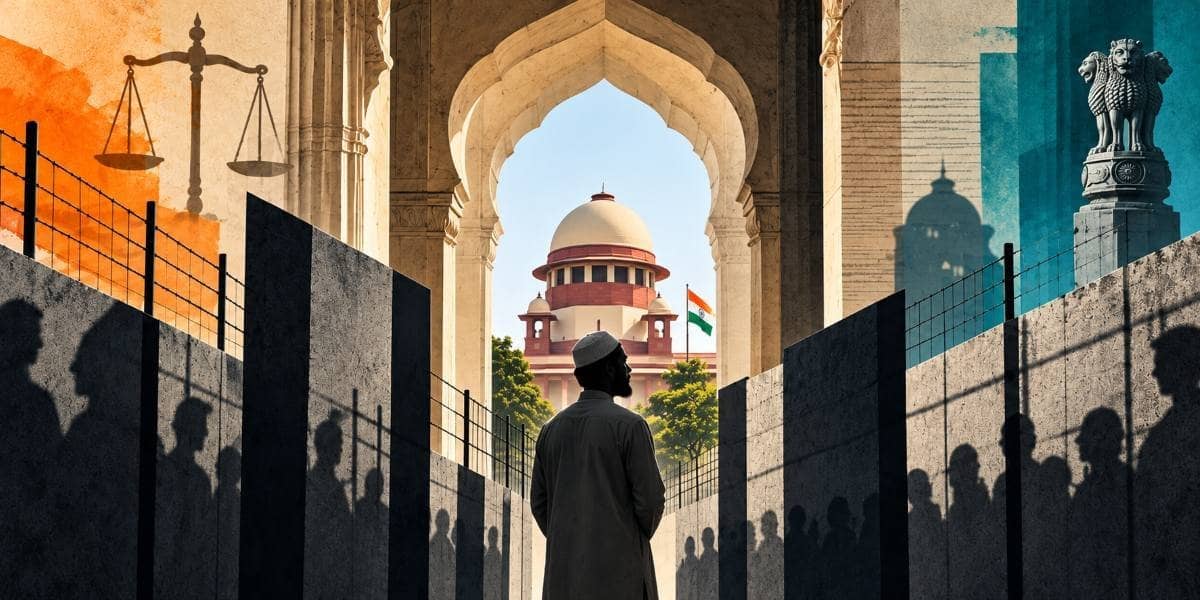
Image | Representative Only
Key Takeaways
1 of 3
Automatically generated. Read full article for complete context.
It has become commonplace to say diversity is India’s strength. It indeed is, provided the conditions that make diversity a strength are clarified and strengthened. If these conditions are not met, diversity becomes a source of weakness and strife.
The most politically consequential dimension of India’s diversity is majority-minority relations. The minimum aim is harmonious co-existence and the maximum aim is genuine affection among majority and minority communities.
Since independence, the dominant expression of India’s diversity has been through the concept of secularism. However, Indian secularism is different from the classical European idea of the state’s equal distance from religions and a public sphere where secular laws apply to citizens irrespective of their religious affiliations. Indian secularism is based on the idea of principled distancePrincipled DistanceThe Indian model of secularism where the state does not maintain a strict separation from religion, but engages with or distances itself based on promoting empowerment and equality., that is, the state policy of selectively priviledging and promoting religious sects and practices on the ground of empowerment.
Unfortunately, in practice, the idea of principled distance does not come with a meaningful test to evaluate whether selective state policies actually promote empowerment or selectively distribute patronage and priviledge for narrow political purposes. This flaw in secular institutionalism made it unpopular among large sections of the country, particularly majority Hindus, many of whom feel political parties used secularism to fortify a consolidated minority vote bankVote BankA loyal bloc of voters from a specific community (religious, caste, or regional) who consistently vote for a particular political party, often mobilized through targeted appeals or policies. at the expense of the majority community. Secularism became discredited as pseudo-secularismPseudo-secularismA political term frequently used in India to accuse certain political parties of practicing minority appeasement under the guise of secularism for electoral gains..
The alternative was Hindu consolidationHindu ConsolidationThe socio-political process of unifying the diverse Hindu population across various caste, linguistic, and regional lines into a single, cohesive voting bloc.. Once this model became electorally successful, it was labelled as majoritarianismMajoritarianismA political philosophy asserting that a majority group (in this context, the religious majority) is entitled to a certain degree of primacy in society and has the right to make decisions that affect the society as a whole.. This is a skeptical and erroneous analysis because the earlier, supposedly ‘secular’, model consolidated Muslim voters and could therefore be equivalently branded as ‘minoritarianismMinoritarianismA term used as a counter-critique to majoritarianism, suggesting a political system or approach that disproportionately caters to or is driven by minority groups.‘.
I will state my position clearly before progressing. According to me, ‘secularism’ failed as a concept in India because it carried untenable ideological baggage, put in place a system that discriminated between religions and tried to engineer a society at odds with historically and culturally rooted realities. It failed to grasp the nature and depth of religious affinity in India, disregarded the public character and public functions of religion, and underestimated the influence of religion as a social and political force. Its political exploitation and subsequent eclipse demonstrate its superficiality and artificiality.
India’s multiculturalism can be better captured through the concept of pluralism, rather than secularism. Pluralism entails the existence of plural communities, acknowledges their importance as parts of the whole and emphasises reciprocity as the vital precondition for communal harmony. Traditionally, pluralism has been practiced in India where different communities not only tolerated but organically interacted, participated in each others’ lives and important occasions and felt a sense of kinship. Religion united rather than divided because shared cultural affinities were mutually recognised and practiced. By reconnecting with this deep tissue of the country’s historical fabric, pluralism can help the country move beyond the toxic overlap of religious polarisation and electoral politics.
The precondition is the willingness of all communities to exhibit maturity, acknowledge civilisational commonalities and progressively work towards softening polarisation. Honest engagement beyond discredited dogmas of Indian secularism is necessary for the process to yield substantial results.
For those who interpret today’s political environment as one of breakaway majoritarianism, it is important to grasp that the Hindu majority population as a whole is simultaneously undergoing a reckoning and a renaissance. The cultural expression of this process is vigorous interest in connecting with roots and reclamation of material and symbolic spaces to restore civilisational continuity. The political expression is nationalism, unity and consolidation in a manner and magnitude that has emerged as the most decisive electoral factor in almost every part of the country.
Is there genuinely a threat to minorities from Hindu assertiveness? Hindu majoritarianism is pluralistic because Hindu ethos is fundamentally pluralistic. The Hindu worldview grasps reality simultaneously as one and the many. Differences – philosophical, religious and political – are natural in the literal sense of the word. Elimination of difference and crude homogenisation are antithetical and even unimaginable to the Hindu worldview. Therefore, those following different religious paths and political preferences have little to fear that they will be forced to think and act like Hindus.
However, pluralism has limits. Suppose an infinite right to consume food of one’s choice is extended, and an individual claims the right to consume human meat – will this ‘right’ be upheld? Similarly, Hindu pluralistic ethos is expansive but finite. A clear line, separating the white from the black, is drawn on questions of national security, cultural identity, historical justice and choice of heroes memorialised in public spaces. Attempts to challenge and change the deeply rooted ethos of the country are like the proverbial right to consume human meat. It is unacceptable.
There is a school of thought that the downfall of secularism is a window of opportunity for Muslim society because it allows Muslims to rethink their positions and prospects, politically reorganise and take control of their destiny afresh. Given the complexities of class, caste, region, education and exposure, this process is bound to be variegated. Still, an active choice is involved and the actual paths taken will be decisive in determining outcomes.
I am an optimist. I believe the ongoing national reformation presents Muslims with a unique opportunity to overcome narratives of isolationism and distinctiveness and reconfigure to a position of openness towards the mainstream of national society. After all, Muslims share deep cultural affinities with the rest of the country: family-oriented, future-minded, hard-working, conscionable, cooperative, altruistic, emotional and God-fearing. These deeply rooted traits ultimately cut across religious divides and unite Indians culturally.
Breaking down the separate identity barrier and entering the mainstream will give them an opportunity to impartially witness the ongoing renaissance in Hindu society, rectify long-held misconceptions, articulate unexpressed and displaced feelings and ultimately participate en masse in nation-building.
To do all this, Muslim society has to make a genuine effort to climb over parochialism and make peace with cultural facts. To cite a couple of emblematic instances, no part of the national songNational Song (Vande Mataram)A historic song of the Indian independence movement. It has occasionally faced resistance from some religious minorities who argue that singing it goes against their monotheistic beliefs. remotely disrespects Islamic faith, so singing it in its entirety cannot be logically interpreted as a violation of faith.
Reasonable restrictions on religious practices in public places are only long-overdue administrative correctives that do not indicate any religious hostility. Acceptance of reasonable asks and embracing Hindu sensitivities can certainly create windows of reciprocity. Reasonable Muslim expectations of respect for what they venerate and dignified practice of religion will cease to attract controversy and receive wholehearted Hindu support. Viewed from a balanced perspective, these are reasonable milestones on the road to genuine pluralism that can only flourish under a strong state composed of mutually harmonious communities.
Secularism failed to create communal harmony because it was built on erroneous assumptions and pursued an objective that is incompatible with historical and cultural realities of India. Its failures increased polarisation and divisions. Pluralism, by comparison, is a more historically and culturally attuned idea because it builds on traditional Indian multiculturalism, accepts realities, avoids the urge for artificial engineering and allows the formation of a genuine inter-community sphere where dialogue, truth-seeking and reconciliation can be pursued while respecting differences.
Instead of wasting valuable energy on the futile endeavour of resurrecting a dead orthodoxy, I invite all thinking and concerned persons with social and national consciousness to engage with a new paradigm.
Disclaimer:The views and opinions expressed in this article are those of the author(s) and do not necessarily reflect the official policy or position of The Rift.
*pluralism vs secularismHindu ConsolidationIndia diversityIndian PoliticsMajoritarianismMinoritarianism