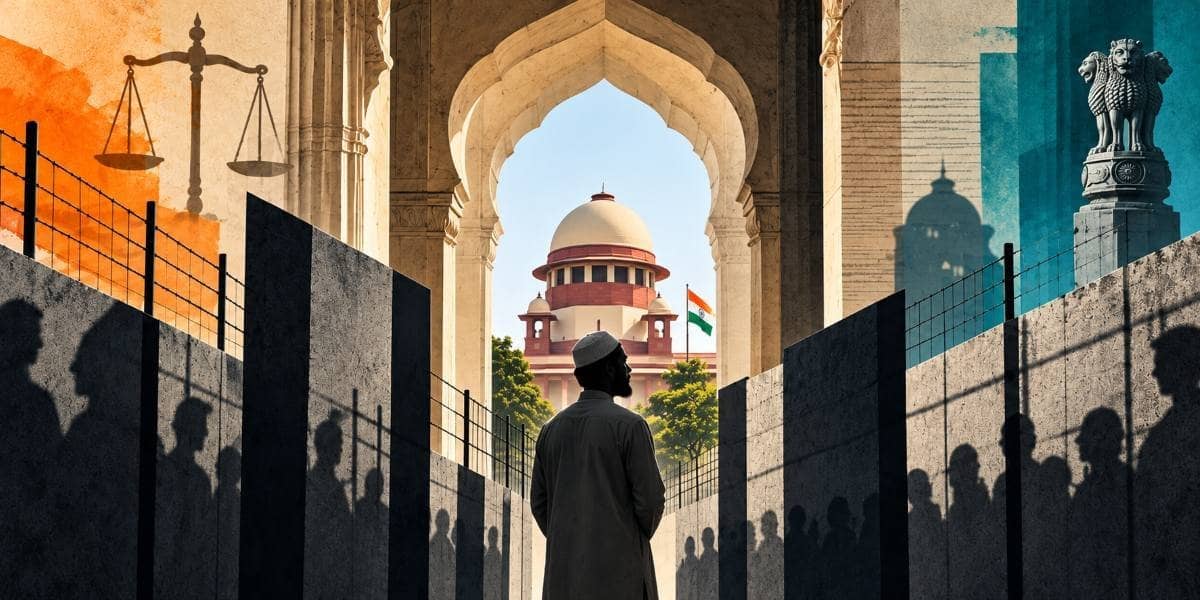
Opening The Rift
therift
© 2026 The Rift. All Rights Reserved.
Law and Loophole: When Law Becomes a Weapon
In polarized societies, legislation is crafted with deliberate ‘architectural loopholes’ to facilitate selective application, transforming law into a tool of systemic disadvantage.

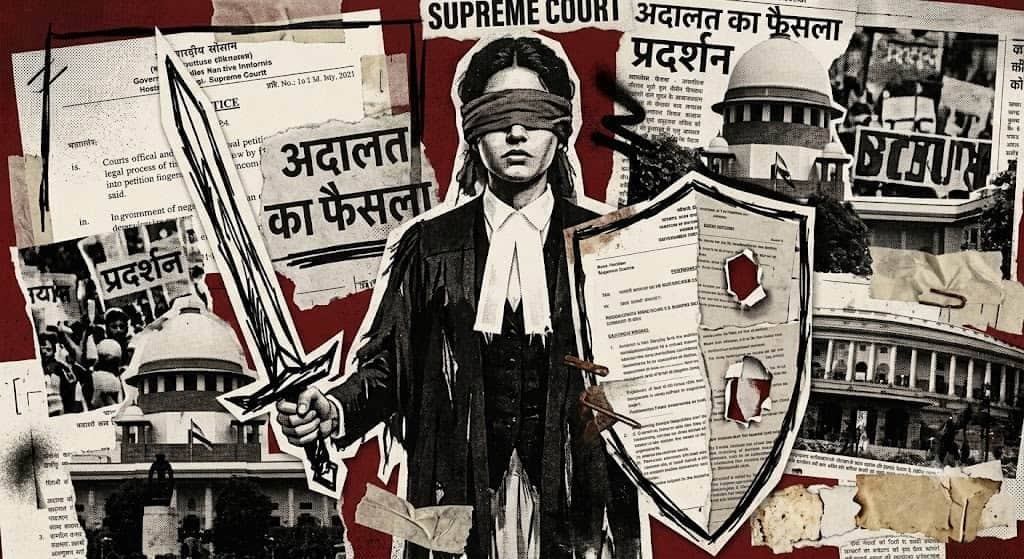
The legal system can sometimes be exploited, highlighting the need for reform (Representative Image)
Key Takeaways
1 of 3
Automatically generated. Read full article for complete context.
The Italian proverb, “Once the law is made, a loophole is found,” serves as a perennial caution against the presumption of legislative perfection. It suggests an inherent tension between the static nature of written law and the dynamic ingenuity of human behavior. However, in contemporary, deeply polarized societies, this observation has evolved: from a comment on human fallibility into a structural critique of governance. We are witnessing an era where legislation is increasingly crafted not merely with inherent flaws, but with possibly deliberate “architectural loopholes” designed to facilitate selective application.
When lawmakers operate under a monochromic agenda, prioritizing the interests of a dominant group while sidelining or targeting marginalized communities, the law transforms from an instrument of universal justice into a tool of targeted systemic disadvantage.
In political science, the “monochromic agenda” refers to governance driven by a singular, exclusionary ideological vision that views societal diversity as a threat rather than an asset. If legislatures are dominated by such agendas, the drafting process shifts. Instead of pursuing the common good, the primary objective becomes the consolidation of power and the containment of “the other.
This manifestation is particularly evident in the construction of legal frameworks that appear neutral on their face, utilizing abstract language, but are designed for tactical deployment. By embedding broad, ill-defined terms within statutes, lawmakers grant executive authorities the leeway of discretion to interpret and enforce the law selectively.
This is the modern “loophole”: it is not a mistake of drafting, but a feature of strategic ambiguity.
The danger of such legislative architecture is most acutely felt by vulnerable groups, most notably religious minorities and, globally, Muslim communities. When legislation is informed by a monochromic bias, the enforcement mechanisms are frequently deployed as instruments of surveillance, restriction, and exclusionary disempowerment.
Laws regarding public order, national security, or residency often contain clauses that provide authorities with wide latitude. In a polarized climate, this discretion is unlikely to be applied equitably. Minority communities often find themselves subject to intense scrutiny under the guise of “rule of law,” while similar activities by members of the majority population are overlooked.
When legislative efforts are framed to target specific minority practices, they reinforce societal prejudices. This creates a feedback loop: the law provides the cover of legitimacy for discriminatory attitudes, which in turn demands further, more restrictive legislation.
A legal system that serves as a tool for one faction to suppress another destroys the social contract. Trust in the judiciary and the state is replaced by the reality of systemic fear, ultimately destabilizing the nation’s democratic foundation.
To counter the weaponization of the law, there is an urgent need to transition from passive acceptance of legislative output to active, rigorous, and external oversight. A potential “misuse audit” represents an essential procedural evolution for constitutional democracies.
An audit of this nature must be conducted by qualified, independent legal professionals, individuals of unimpeachable standing who operate outside the influence of partisan political cycles. The mandate of such an audit should be threefold :
- Linguistic Precision Testing : Reviewing proposed or enacted legislation to identify vague terminology that invites arbitrary enforcement and demanding the inclusion of strict, narrow definitions that limit executive discretion.
- Disparate Impact Analysis : Utilizing empirical data to assess whether a statute, regardless of its stated intent, disproportionately burdens specific minority populations. If a pattern of targeted application is identified, the audit should trigger a mandatory legislative review or invite automatic judicial stay.
- Intent and Institutional Ethics : Evaluating the deliberative processes of lawmakers. Where a monochromic agenda is evident in the record of legislative debate, the audit serves as a check against the resulting statutes, ensuring that constitutional protections against discrimination are not circumvented.
The Italian proverb reminds us that loopholes are inevitable, but it does not mandate that we be complicit in their creation. In a climate where law is being utilized to entrench polarization and systematically target minorities, the defense of human rights requires more than just judicial review : it requires a proactive, critical examination of the legislative process itself.
The integrity of a society is measured by how it protects those at the margins. If the law is to return to its intended purpose, i.e., the impartial administration of justice, the nation must move toward a model of governance characterized by radical transparency and the rigorous, independent auditing of legislative intent. Without these safeguards, the law ceases to be a shield for the weak and, inverted, becomes a sword for the powerful.
The “loophole” within the law can manifest not only through legislative oversight, but also through deliberate structural design. In contexts where monochromic agendas guide policymaking, statutes are frequently crafted with sufficient ambiguity to allow for selective application. When these laws intersect with investigative and prosecutorial agencies, they can be weaponized against specific minorities such as Muslim communities, effectively turning the machinery of justice into an instrument of systemic marginalization.
Below are examples of how legal frameworks have been leveraged, often amid critiques of judicial deference to executive power.
Statutes like the Unlawful Activities (Prevention) Act (UAPA) and colonial-era sedition laws provide the state with broad, often ill-defined powers to categorize dissent or association as threats to national security. Critics and human rights organizations have highlighted a pattern where these laws are disproportionately invoked against activists, students, and journalists. In cases such as the North-East Delhi riots or the Bhima Koregaon case, the prolonged pretrial detention of activists, some of whom are Muslim or allies of marginalized groups, demonstrates how the “loophole” of broad anti-terror definitions allows for indefinite confinement without immediate judicial scrutiny of evidence.
Often, courts have been criticized for maintaining a high threshold for bail under these acts, effectively adopting a “presumption of guilt” rather than “innocence until proven guilty.” By deferring to the investigative agencies’ version of events, the judiciary has, in some instances, allowed these agencies to bypass the rigorous standards of proof typically required in criminal law.
Administrative and “Moral” Legislation
Legislation aimed at social regulation, such as anti-conversion laws and marriage-related ordinances, often utilizes vague terminology like “fraudulent means” or “inducement” to regulate religious practice.
These laws have frequently been used to target interfaith relationships, particularly those involving Muslim men. The ambiguity in the definitions of “conversion” and “coercion” allows local police and administrative authorities wide latitude to initiate investigations, which serve more as tools of intimidation and societal stigmatization than as genuine legal enforcement.
While courts have occasionally intervened to protect individual liberties (e.g., in cases involving the right to choose a partner), there remains a systemic concern that the judiciary has not consistently addressed the pattern of selective enforcement, often treating these incidents as isolated legal disputes rather than a broader campaign of discriminatory application.
The “Invisible” Nature of Bias
The systemic vulnerability to selective application is often compounded by the “invisibilization” of bias. This occurs through several mechanisms :
As noted by legal scholars, the ability of agencies to control the flow of information, and the reluctance of courts to aggressively audit the “intent” behind police filings, creates a vacuum where discriminatory practice thrives.
Cases involving minority rights are often bogged down in bureaucratic delays, while other, “higher priority” matters receive preferential, expedited treatment. This effectively renders the legal remedy inaccessible for those who need it most.
In instances where investigative agencies enjoy a close alignment with the executive branch’s agenda, the judiciary’s role as a “watchdog” can become passive. When courts decline to examine the political motivation behind a prosecution, they essentially validate the use of the law as an instrument of a biased agenda.
The evidence of these trends underscores the need for an independent, professional audit of legal application. Such an audit, as previously proposed, would need to move beyond individual case analysis to evaluate :
- Disparate Impact Data : Examining whether specific statutes are statistically applied more frequently against Muslim communities or other minorities.
- Prosecutorial Accountability : Establishing mechanisms to hold investigative agencies accountable when evidence of bad-faith filings or selective targeting is identified.
- Constitutional Vigilance : Shifting the judicial burden to require the state to prove that a law is being applied neutrally, especially when prima facie evidence suggests the existence of a discriminatory agenda.
The other “loophole” in this case is not just a gap in the text of the law, but a gap in our institutional commitment to ensuring that the law serves the equal protection clause rather than the narrow interests of power.
The evolution of judicial review in India, particularly regarding the intersection of administrative/anti-terror statutes and individual liberties, is currently at a critical juncture. As of 2026, with the formalization of the PRAHAAR comprehensive counter-terrorism policy, the tension between executive “zero-tolerance” mandates and the judiciary’s role as a constitutional guardian has become more pronounced.
The judicial response to the potential weaponization of laws like the UAPA (Unlawful Activities (Prevention) Act) and PMLA (Prevention of Money Laundering Act) is currently characterized by a struggle between two competing philosophies :
- The Doctrine of Deference : In the current security climate, courts have increasingly signaled that in matters of “national sovereignty” and “security,” the executive’s assessment often holds greater weight. As seen in recent bail jurisprudence (e.g., Gulfisha Fatima v. State), some benches have held that while prolonged incarceration impacts Article 21, it cannot automatically override the prima facie requirements for bail under stringent statutes where “jail is the rule.”
- Corrective Interventionism : Conversely, there are signs of targeted judicial pushback. The Supreme Court has increasingly intervened to curb “abhorrent” or degrading bail conditions such as those requiring activists to perform menial labor at police stations. Additionally, the Court has begun to emphasize the need for “promptitude and disclosure” in investigations, mandating that courts look past the state’s broad claims to ensure that investigative agencies are not merely using procedure as a form of punishment.
The Emerging Mechanism
While a formal, independent “misuse audit” as desired does not yet exist as a state-sanctioned institution, the judiciary is tentatively moving toward functional equivalents :
- Mandatory Disclosure Frameworks : Recent judicial directions have pushed for high courts to mandate the systematic disclosure of “criminal antecedents, prior bail rejections, and the exact progress of trials.” This is a step toward preventing the state from keeping undertrials in legal limbo indefinitely : a core component of the “weaponization” strategy.
- Prima Facie Scrutiny : Scholars note that the judiciary’s role is shifting toward a stricter interpretation of what constitutes “reasonable grounds” for accusation. By requiring the prosecution to demonstrate that a statute’s application is not merely a pretext for silencing dissent, the courts are moving to disentangle “political aspirations” from “terrorist acts.”
- Institutional Skepticism : There is growing scholarly and legal pushback against the “invisibilization” of bias. The discourse is shifting toward holding agencies accountable for “bad-faith filings.” The judiciary is beginning to recognize that if it does not act as a safeguard against the executive’s monochromic agenda, it risks losing its legitimacy as the protector of minorities.
The primary hurdle for these evolving mechanisms remains the “rally around the flag” effect. When cases are framed as “Islamic terrorism” or threats to national integrity, judges often face immense pressure to align with executive narratives to avoid accusations of being “soft on terror.” Consequently, the evolution of judicial review is currently a “piecemeal” process rather than a systemic one : it relies on the courage of individual benches to prioritize constitutional rights over state security narratives.
Ultimately, the transformation of judicial review from a passive observer to an active auditor requires not just legal precedent, but a broader institutional culture shift that views the “loophole” not as a security necessity, but as a direct challenge to the rule of law itself.
The Jan Vishwas (Amendment of Provisions) Act, 2023 represents a significant regulatory pivot, shifting from an incarceral to an administrative-penalty framework. While its stated objective is “ease of doing business” and reducing judicial pendency, its structure inherently introduces new risks regarding executive discretion and selective application.
The Act decriminalizes 183 provisions across 42 central laws by converting criminal offenses into civil penalties. It replaces court-based criminal trials with the appointment of Adjudicating Officers and Appellate Authorities largely drawn from the bureaucracy. Criminal sanctions (jail terms) are replaced by monetary fines, which are subject to an automatic 10% increase every three years. Some provisions (like those in the Legal Metrology Act) allow for “improvement notices,” providing an opportunity to rectify non-compliance before a penalty is levied.
From a legal-professional perspective, the shift from judicial oversight to executive adjudication is where the risk of weaponization lies. The “loophole” here is not in the text, but in the breadth of bureaucratic discretion.
By transferring the power to adjudicate from the judiciary to departmental officers, the Act creates a system where the regulator is effectively the judge. Without robust, transparent guidelines, these officers have the latitude to target specific entities or individuals, including those identified as “political, social, or religious outliers” while ignoring similar lapses by others.
While appellate mechanisms exist, they are often internal to the executive hierarchy. If these appellate bodies are influenced by the same “monochromic agenda” that guides the investigative agencies, the “misuse audit” to becomes incredibly difficult to conduct from within the system, and rendered illusory.
Many of the provisions deal with “procedural lapses.” In a polarized environment, these can be weaponized. For instance, minor documentation errors in a trust or business entity, which would normally be overlooked, could be fast-tracked for maximum penalties or “improvement notice” failures to harass organizations viewed as antagonistic to the prevailing political narrative.
Smaller businesses, trusts, or civil society organizations, often lacking the legal resources to challenge administrative fines or navigate complex appellate procedures, are disproportionately vulnerable to the “chilling effect” of these new administrative powers.
“Misuse Audit” is this a necessity, because the Jan Vishwas framework empowers the bureaucracy rather than the courts, and the need for a qualified legal audit is more urgent than ever. Such an audit must now focus on determining if penalties are applied uniformly across different sectors and profiles of non-compliant entities, auditing whether the “improvement notice” system is offered equitably or used selectively to pressure “disfavored” organizations, scrutinizing the record of Adjudicating Officers to identify patterns of bias in their findings, etc.
In conclusion, while the Act intends to declutter the courts, it risks creating a “parallel justice system” that operates with less transparency than the formal judiciary. For an advocate, the challenge is no longer just defending against criminal charges, but navigating a web of administrative adjudication that requires a high degree of vigilance to prevent it from becoming an instrument of targeted exclusion.
Jai Hind
Disclaimer:The views and opinions expressed in this article are those of the author(s) and do not necessarily reflect the official policy or position of The Rift.