Opening The Rift
therift
© 2026 The Rift. All Rights Reserved.
Right to the City for Urban Unorganised Workers : Banafula Residents’ Four-Decade Struggle Continues from Informal Settlement to Recognised Settlement
Rights Panel Pulls Up BMC, Khordha District Administration , R&B Division-III, Bhubaneswar Over Delayed Rehabilitation and Poor Living Conditions at Banafula Basti

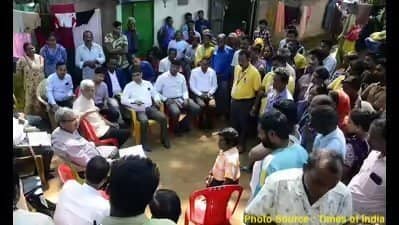
OHRC team interacts with the slum residents
Key Takeaways
1 of 3
Automatically generated. Read full article for complete context.
Bhubaneswar , Odisha : A prolonged rehabilitation dispute involving hundreds of displaced families at Banafula Basti has once again come under scrutiny, with the Odisha Human Rights Commission (OHRC) expressing serious concern over the failure of the authorities to implement its recommendations on housing rights, sanitation, drainage, and other basic civic amenities. The matter arises from OHRC Case No. 2725 of 2025, filed by noted human rights activist Biswapriya Kanungo.
The case pertains to 208 families who were evicted from the Railway Colony slum near Budhanagar for a public project and shifted to Banafula Basti on a temporary basis with assurances of permanent rehabilitation. More than a decade later, many of the displaced families continue to live in the settlement without complete land rights and in unhygienic conditions.
Commission Finds Unhygienic Living Conditions
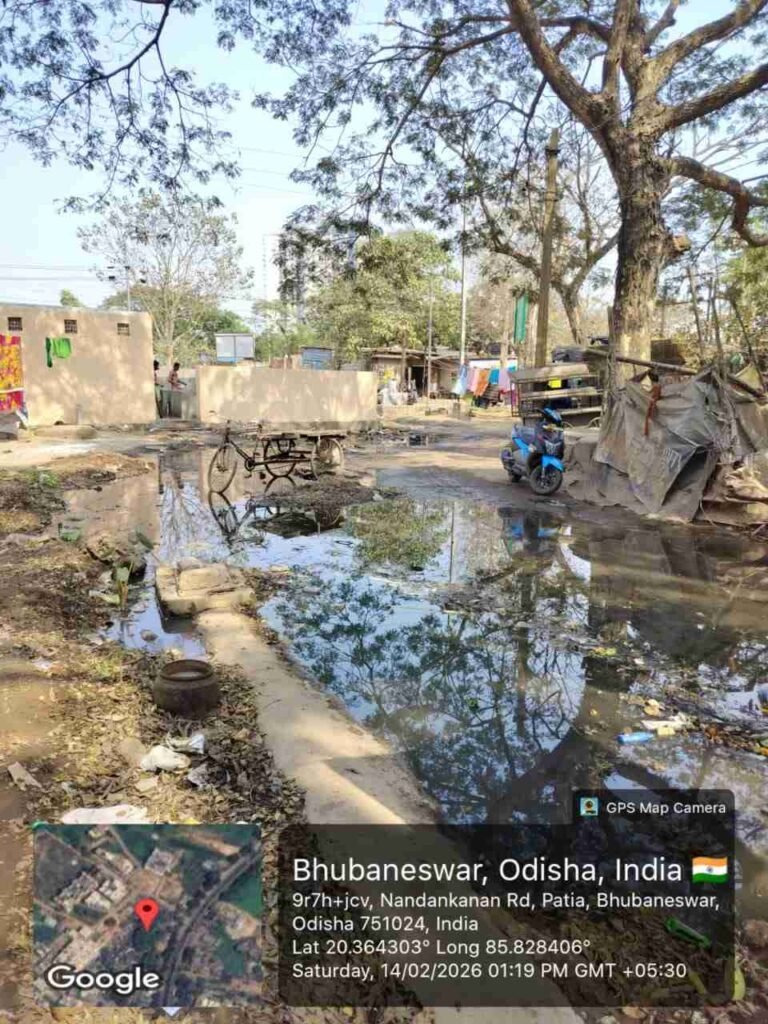
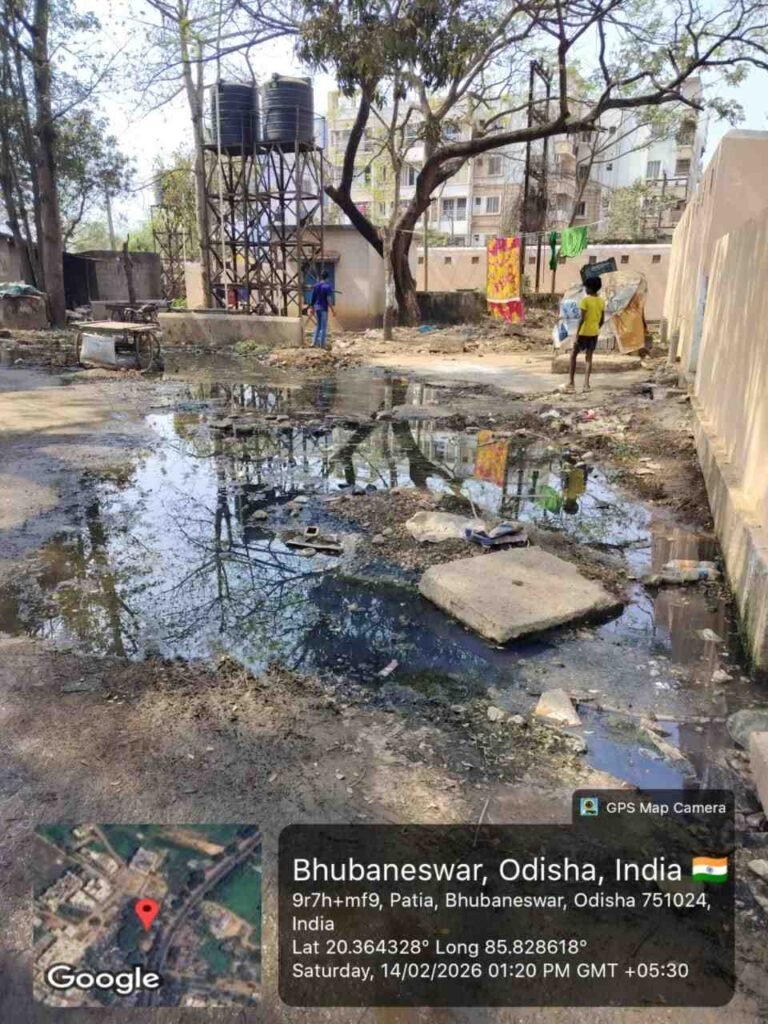
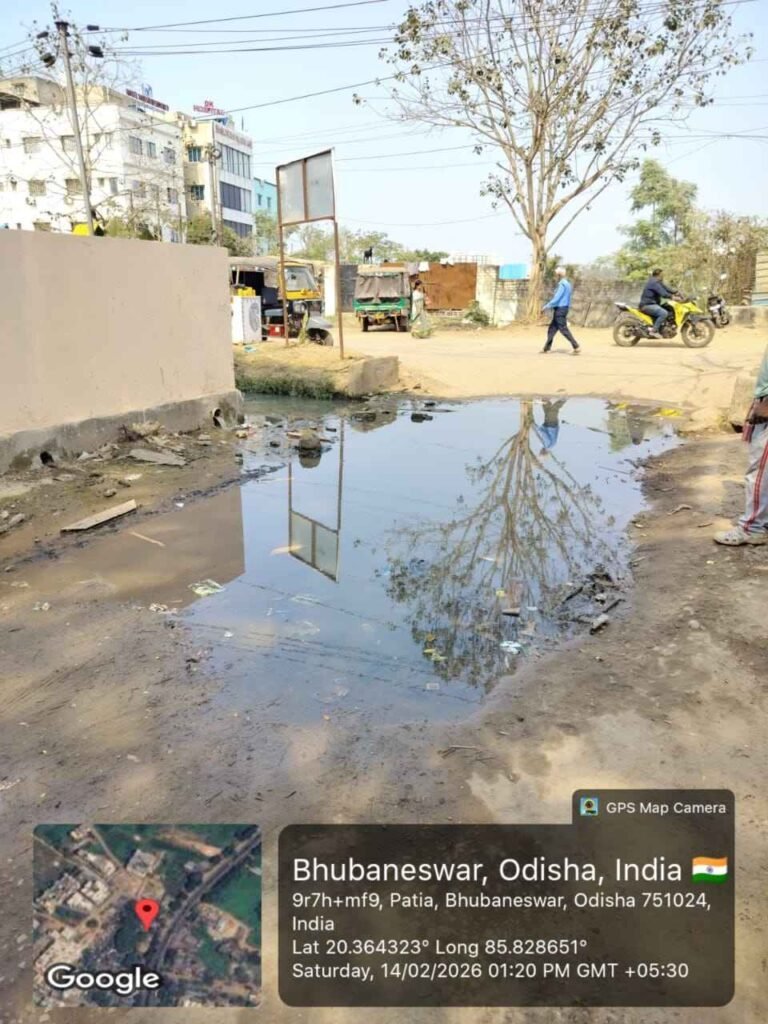
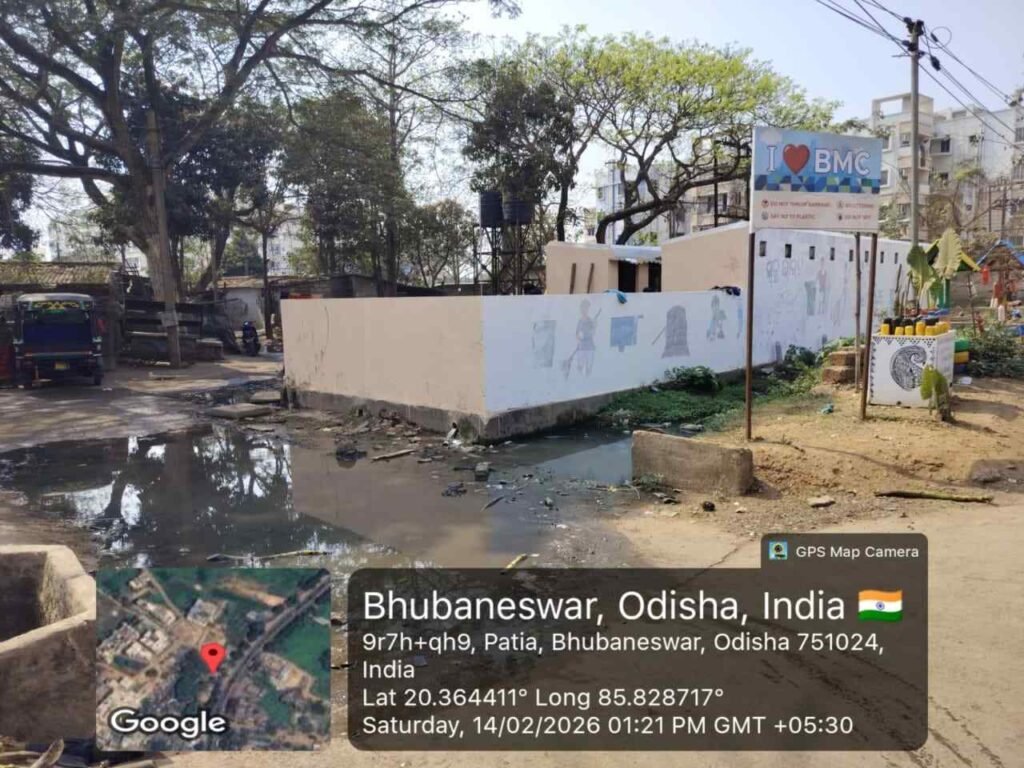
During a field visit on 15 October 2025, the Chairperson of the OHRC, accompanied by officials of the Bhubaneswar Municipal Corporation (BMC) and the Roads & Buildings (R&B) Division, Bhubaneswar, observed that contaminated wastewater from nearby drains was flowing through the slum because of the absence of a proper drainage system, exposing residents to serious health hazards.
The Commission also found that:
- Common toilets and bathing facilities had become non-functional.
- Internal roads within the slum had not been developed or maintained.
- Earlier directions to prevent wastewater from entering the settlement had not been implemented.
Officials of the Bhubaneswar Municipal Corporation (BMC) and the Roads & Buildings (R&B) Division, Bhubaneswar assured the Commission that immediate remedial measures would be taken.
Land Rights Issue at the Centre of Dispute
The Commission heard complaints that although all 208 displaced families were issued tokens after eviction and provided ₹6,000 as temporary rehabilitation assistance, many eligible families were either denied Land Rights Certificates (LRCs) or asked to pay fees despite belonging to the Economically Weaker Section (EWS).
Following the implementation of Odisha’s slum land rights initiative, Jaga Mission, under the Odisha Municipal Corporation Act, a survey of Banafula Basti was conducted in 2022.
According to records submitted before the Commission, the Bhubaneswar Municipal Corporation (BMC) stated that a total of 164 families were surveyed. Of these, 141 families were found eligible for Land Rights Certificates (LRCs), while 23 families were declared ineligible without any reasons being assigned or communicated. Of the 141 eligible families, 98 were issued LRCs, while the remaining 43, classified as non-Economically Weaker Section (non-EWS) households, were asked to deposit the prescribed amount before the certificates could be issued.
The Commission questioned the exclusion of these 23 families, observing that no supporting records were produced despite repeated directions.
The Commission found that, of the 208 families displaced during the relocation process, some families (about more than 25 families) had been provided temporary accommodation on forest land by the government. The Bhubaneswar Municipal Corporation (BMC) informed the Commission that Land Rights Certificates (LRCs) could not be issued to these families as they were residing on forest land.
While acknowledging that LRCs cannot legally be granted for residential occupation on forest land, the Commission observed that vacant land was available within the relocation site at Banafula Basti, where other beneficiaries had already been issued LRCs. Referring to submissions made by the complainant, Biswapriya Kanungo, that the available land could accommodate the families who had been temporarily settled by the government on forest land, the Commission recommended that the BMC allot the available tenable land to the remaining eligible residents of Banafula Basti and issue LRCs in their favour, in accordance with its earlier recommendations.
The Commission also considered the case of S. Amma, wife of the late S. Rabi (RAY No. 57), one of the displaced residents. According to the complainant, although she had been issued a relocation token, she was left out of the beneficiary list because her husband had died and she was away from her residence at the time of the survey. The Commission directed her to submit a representation to the BMC and recommended that the Corporation verify her claim on the basis of relevant documents and other evidence. If found eligible, her case should be considered for the grant of an LRC over and above the 164 families covered under the survey.
With regard to the 43 families from whom a certain amount was sought to be deposited for the grant of LRCs on the ground that they did not belong to the EWS category, it was submitted before the Commission during the field visit, in the presence of BMC officials, that these families actually belong to the EWS category.
The Commission observed that, if such a claim is made, the concerned families shall produce valid documents establishing their EWS status. Upon verification, if the documents are found to be genuine and the claim is established, the Commission recommended that the BMC reconsider their cases and issue LRCs in their favour without insisting on payment of the demanded deposit amount.
Recommendations to BMC
The Commission recommended that:
- The 23 families excluded from the survey be considered for the grant of Land Rights Certificates (LRCs) upon submission of affidavits establishing their eligibility.
- Families belonging to the Economically Weaker Section (EWS) be issued LRCs without payment of any fee upon production of valid supporting documents.
- The Bhubaneswar Municipal Corporation (BMC) provide written reasons and an opportunity to be heard before rejecting any claim for land rights.
- The claims of other displaced families left out of the survey be reconsidered in accordance with law.
- The BMC allot available tenable land within Banafula Basti to families who had been temporarily settled on a portion of the forest land and issue LRCs in their favour.
The Commission fixed deadlines for completing the verification process and directed compliance reports to be submitted.
Civic Amenities Ordered
Apart from land rights, the Commission directed authorities to improve living conditions in Banafula Basti by: (i) Constructing and repairing internal roads with paver blocks; (ii) Restoring common toilets and bathing facilities; (iii) Preventing wastewater from entering the settlement through temporary and permanent drainage measures; and (iv) Addressing waterlogging in the locality.
The Commission warned that failure to implement temporary drainage measures could invite action against the concerned officials.
Other Welfare Measures
Recognising the residents’ long-term rehabilitation concerns, the Commission further recommended: (1) Establishment of an Anganwadi Centre. (2) Transfer of ration cards from the old Railway Colony addresses to the nearest fair price shop serving Banafula Basti. and (3) Consideration of rehabilitation for residents who were left out despite possessing displacement tokens.
Subsequently, the Food Supplies and Consumer Welfare Department informed the Commission that 65 ration cards had been transferred to the nearest fair price shop.
Encroachments Stall Drain Project
Despite partial progress, the Commission noted that construction of the concrete drainage system remains incomplete.
The R&B Bhubaneswar Division, reported that approximately 40 metres of the drain have been completed, but further work has been stalled because of encroachments along the proposed alignment. The R&B Division stated that repeated requests had been made to the Bhubaneswar Municipal Corporation for removal of encroachments but no action had been taken.
The Commission directed the Collector and District Magistrate, Khordha, to remove encroachments in accordance with law so that the remaining drainage work could be completed.
Fresh Notice Issued
During the latest hearing, the complainant informed the Commission that several of its recommendations had still not been implemented.
Taking note of the incomplete compliance, the Commission has issued notices to (1)The Collector and District Magistrate, Khordha; (2) The Commissioner, Bhubaneswar Municipal Corporation; and (3) The Superintending Engineer, R&B Division-III, Bhubaneswar, directing them to appear personally before the Commission on 7 August 2026 and explain the delay in implementing its orders.
The Commission is expected to review compliance on rehabilitation, land rights, drainage infrastructure and other civic amenities during the next hearing.
Background, Origin, and Relocation of Banafula Basti
The author interviewed Biswapriya Kanungo, the complainant in OHRC Case No. 2725 of 2025 and one of the key figures associated with the Banafula slum movement, to document the historical background, origin, and evolution of Banafula Basti and its decades-long struggle for recognition and housing rights.
Based on the information gathered through the interview, the following account has been compiled to present the history of the settlement, its community organisation, and its subsequent relocation.
Nomenclature of Banafula Basti
Prior to 1971, the office of Banafula, a tribal magazine of Odisha edited by Sri Upendra Mishra, was located at Buddhanagar near the Railway Station. During this period, a group of economically weaker urban poor families began settling on land adjacent to the railway line, gradually forming a slum settlement.
As the settlement was situated close to the Banafula office, which served as a prominent local landmark, people began referring to the area as Banafula Basti or Banafula Slum. Over time, this name became the commonly recognized identity of the settlement.
Informal School at Banafula Basti: A Centre for Slum Organisation and Community Mobilisation
In 1982, four grassroots leaders—Bideshi Das of Banafula Basti, D. Kedar, a cycle mechanic and leader of Ashoknagar Basti, Narayan Sahoo of Bapuji Nagar Basti, and Nrusingh Lenka of Gautamnagar Basti—joined hands with a group of socially committed university students to establish a small trade union, the “Jaya Durga Trolley Rickshaw Chalak Association”, in the Rajmahal area of Bhubaneswar. The association was founded with the objective of raising the concerns of the marginalised urban poor and advocating for their identity, rights, livelihoods, and the right to live with dignity.
Biswapriya Kanungo, then a university student, served as the founding President, while D. Kedar became the Secretary, Bideshi Das the Vice-President, and Nrusingh Lenka the Joint Secretary. The association also drew strength from a committed group of university students and community leaders, including Prasant Jena, Md. N. Amin, Ratankar Mallick, Bharati Ray, Kaliprasad Nanda, Pradipta Jena, Narayan Sahoo, Saubhagya Ranjan Sundar Ray, Pratap Mohan Kanungo, Sujata Jena, Jadunath Panda, Laxmidhar Rout, Nilamani Mishra and others, all of whom actively participated in slum development initiatives across four slum settlements in Bhubaneswar—Bapuji Nagar, Buddha Nagar (Banafula Basti), Gautam Nagar, and Ashok Nagar.
In its early years, the association had no formal office. Instead, the slum settlements themselves served as its workplace and centre of action, while Rajmahal Square became its regular meeting place. Members gathered there to discuss the problems faced by the urban poor, plan collective action, and mobilise support for their causes. Working closely with slum residents, the association addressed issues of housing, access to basic services, livelihoods, and social justice.
One of its earliest and most significant initiatives was the establishment of “Gopabandhu Primary School” at Banafula. Conceived as an informal school, it was created to provide educational opportunities for children from the surrounding slum communities who had little or no access to formal schooling. The initiative reflected a unique partnership between grassroots community leaders and socially conscious university students who believed that education was a powerful means of promoting social change and community empowerment.
Ratankar Mallick served as the Headmaster and played a pivotal role in the establishment, development, and day-to-day functioning of the school. Through the collective efforts of community leaders, student volunteers, and local residents, Gopabandhu Primary School became a symbol of the community’s commitment to education, self-help, and social upliftment.
Bidesi Das transported young children from neighboring slums, including Bapuji Nagar, to Gopabandhu Primary School in Banafula Basti (Budhanagar) every day using his trolley rickshaw. After school, he safely dropped each child back at their doorstep. His selfless commitment to providing free daily transportation made it easier for children from underserved communities to attend school regularly and served as a strong encouragement for slum children to participate in informal education at Gopabandhu Primary School.
Beyond its educational mission, the school soon evolved into the principal meeting place for residents and leaders of the four neighbouring slums. It provided a common platform where community members met regularly to discuss shared concerns, formulate development strategies, resolve local issues, and coordinate collective action to improve living conditions. In this way, Gopabandhu Primary School became not merely an institution of learning but also a centre for community organisation, participatory leadership, and grassroots mobilisation. It fostered solidarity among the neighbouring slum communities and laid the foundation for sustained efforts towards social justice, improved civic amenities, and the empowerment of the urban poor.
The experience of Banafula Basti demonstrated how a modest community school could become a catalyst for broader social transformation. By integrating education with community organisation and participatory development, the initiative strengthened local leadership, encouraged collective action, and nurtured democratic decision-making among residents. The school emerged as a model of inclusive urban development, illustrating how education can extend beyond the classroom to become a foundation for community empowerment, social justice, and sustainable grassroots action.
Eviction attempt of the Slums and Arrest of Leaders under the Pretext of Dialogue
In April 1985, the Government initiated proceedings to evict the residents of Banafula Basti, Ashok Nagar Basti, Bapuji Nagar Basti, and Gautam Nagar Basti. On 15 April 1985, the enforcement authorities began demolition operations in these settlements. The eviction drive created widespread anxiety among the affected communities, who feared the loss of their homes and livelihoods.
On 16 April 1985, the leaders and residents of the four slums united in peaceful protest against the eviction. Their collective resistance prevented the enforcement team from proceeding with the demolition of the houses.
Faced with this united opposition, the authorities invited the slum leaders to the local police station for what was presented as a dialogue between Government officials and representatives of the affected communities. However, instead of holding negotiations, the police detained Adv. Prasant Jena and Pradipta Jena from 12:00 p.m. to 8:00 p.m. They were subsequently released on a personal recognizance (PR) bond following the intervention of Nandini Satpathy, the then Congress MLA from Dhenkanal Assembly Constituency and former Chief Minister of Odisha.
The detention of the two leaders was perceived by many residents as an attempt to weaken the leadership of the anti-eviction movement and facilitate the eviction process. Rather than discouraging the movement, however, the incident strengthened the unity and determination of the slum communities. It reinforced their resolve to defend their homes through collective action and further consolidated the movement for housing rights and social justice.
Memorandum to the Chief Minister to Stop Slum Evictions
On 17 April 1985, a delegation of slum leaders, accompanied by residents and their children, marched to the residence of the then Chief Minister of Odisha, Janaki Ballabh Patnaik, to submit a memorandum in defiance of the prohibitory orders imposed under Section 144 of the Code of Criminal Procedure (CrPC). The memorandum urged the Government to halt the eviction of slum settlements in Bhubaneswar unless suitable alternative housing was provided within or near the existing localities, thereby protecting the lives, livelihoods, and social networks of the urban poor.
Coincidentally, the Chief Minister was scheduled to leave for election campaigning in the Khurda Assembly by-election, where Baidyanath Misra, the Indian National Congress candidate, was contesting against the Independent candidate Prasanna Patasani. As the Chief Minister was preparing to depart, the delegation was unable to meet him or formally present the memorandum.
As the Chief Minister’s motorcade was leaving the residence without responding to the peaceful protesters, tensions escalated. Amid the crowd, a young child from one of the slum families fell in front of the Chief Minister’s vehicle, forcing the motorcade to stop. At the same time, a few individuals in the crowd hurled shoes at the Chief Minister’s car. The assembled residents then surrounded the vehicle and renewed their request for an audience. In the ensuing circumstances, the Chief Minister accepted the memorandum from the representatives of the slum communities and assured them that their concerns would be considered.
However, the police registered a First Information Report (FIR) at Capital Police Station against several movement leaders and slum residents. Consequently, a criminal case was initiated against Biswapriya Kanungo, Narayan Sahoo, D. Kedar, and others. Kanungo was arrested but was released on personal recognizance (PR) from the police station, reportedly owing to the liberal and conciliatory approach adopted by the then Inspector-in-Charge (IIC) of Capital Police Station, Manu Mishra. Ultimately, the case was closed after the police, in their final report, found insufficient evidence to prosecute the accused.
The protest marked a significant milestone in the emerging movement for the housing rights of the urban poor in Bhubaneswar. Following the submission of the memorandum and subsequent engagement with the Government, the proposed eviction drive was halted, providing temporary relief to thousands of slum residents. The episode also underscored the effectiveness of organised, non-violent collective action in securing recognition of the housing rights and dignity of the urban poor.
Slum Dwellers Halt the Neelanchal Express
In 1987, the Government of Odisha once again initiated a drive to evict slum settlements in Bhubaneswar. In response, residents of Ashok Nagar Basti and Banafula Basti organised a determined protest to defend their homes and livelihoods.
As part of the protest, hundreds of slum residents gathered on the railway tracks and staged a rail blockade, sitting and lying across the line, which brought the Neelanchal Express to a halt. Declaring that they had nowhere else to go, the protesters demanded that the Government either provide secure shelter or allow the train to run over them rather than render them homeless. Their kind of protest reflected the depth of their desperation and their determination to resist eviction without rehabilitation.
The protest drew the attention of the authorities and the wider public to the plight of the urban poor. Following discussions with the protesters and their representatives, the eviction drive was suspended. The incident became a landmark in the struggle for the housing rights of slum dwellers in Bhubaneswar, demonstrating the power of collective, non-violent action in compelling public authorities to respond to the concerns of marginalised communities.
Relocation of Banafula Basti from Buddhanagar to Patia Mouza under BMC
Indian Railways undertook a major programme of infrastructural and operational upgrades in preparation for the Nabakalebara Festival in 2015. As part of this initiative, the East Coast Railway (ECoR) undertook the doubling of the Bhubaneswar–Delang–Puri railway line to facilitate the operation of more than 200 special trains and ensure the safe transportation of approximately 50–60 lakh pilgrims expected to attend the mega event.
In view of this large-scale public infrastructure project, the Government of Odisha, in consultation with the Central Government, proposed the rehabilitation and resettlement of the residents of Banafula Basti, located at Buddhanagar, under the Rajiv Awas Yojana. The proposal included the allotment of land near Nandan Vihar in Patia Mouza, along with the provision of basic civic amenities and essential services at the new settlement. It was also assured that permanent housing under the Rajiv Awas Yojana would be provided to the relocated families.
Following discussions with community representatives, the slum leaders accepted the proposal with the understanding that the relocated families would receive secure land rights, necessary infrastructure, basic amenities, and permanent housing facilities at the new location. They also recognised the importance of the Nabakalebara-related railway infrastructure development as a public interest initiative.
Accordingly, 208 families of Banafula Basti were relocated from Buddhanagar to Patia Mouza and settled at the new site without any protest or resistance. The relocated settlement continued to retain the name Banafula Basti, reflecting the continuity of the community’s identity and social bonds. The relocation marked an important phase in the community’s journey, representing an attempt to balance the requirements of major public infrastructure development with the rehabilitation and settlement needs of the urban poor.
Subsequently, on 9 March 2015, a joint team comprising officials from the Bhubaneswar Development Authority (BDA), Bhubaneswar Municipal Corporation (BMC), General Administration Department, East Coast Railway (ECoR), and Commissionerate Police carried out an eviction drive at the remaining Banafula slum settlement under Laxmisagar Police Station in Bhubaneswar. The operation was undertaken to take possession of the railway land on which the settlement was located.
Furthermore, the Government did not grant permission or formal recognition to the informal Gopabandhu Primary School, which operated in Banafula. Although the school was eventually closed following a prolonged legal battle, one of its former students, Aapna Rao—who is a dwarf and a Person with Disabilities (PwD)—went on to become a community leader of the present Banafula Basti, now located in Patia Mauza near Nandan Vihar.
Biswapriya Kanungo, who was a young university student when the Jaya Durga Trolley Rickshaw Chalak Association was formed in 1982, has remained closely associated with the struggles of Banafula Basti for more than four decades. Today, alongside community leader Aapna Rao, he continues to fight for the rights of the unorganised workers and residents of Banafula Basti, advocating for secure housing, recognition of their settlement, and their right to the city.
Disclaimer:The views and opinions expressed in this article are those of the author(s) and do not necessarily reflect the official policy or position of The Rift.