Opening The Rift
therift
© 2026 The Rift. All Rights Reserved.
Stronger Peace Base Needed to Ensure World Does Not Go From War to War
Wars not only kill huge numbers of people directly, but in addition often more people die indirectly by the disease and disruptions wars bring.


Key Takeaways
1 of 3
Automatically generated. Read full article for complete context.
In recent times the wars in Ukraine and the middle-east have consumed so much attention that several ongoing and potential wars and conflicts in Africa and elsewhere have scarcely received the urgent attention they need. The humanitarian crisis relating to these ‘lesser’ wars actually threatens hundreds of millions of people today.
In view of the wider dangers they pose, the entire world will be truly relieved and thankful for an early end to the wars in Ukraine and the Middle East but, judging from existing trends, there is no guarantee that other dangerous conflicts do not already lurk in the shadows, ready to ignite at the slightest provocation or incitement.
The World Peace IndexWorld Peace IndexA report published annually by the Institute for Economics & Peace that ranks countries by their level of peacefulness. It measures factors such as societal safety and security, ongoing conflict, and militarisation., prepared by the Institute of Economics and PeaceInstitute of Economics and PeaceA global think tank that develops metrics and models to analyze the economic and social impact of violence and conflict, and to promote a more peaceful world., counted as many as 78 transborder wars in 2023, an increase of 175% since 2010. While the number of wars has increased significantly, chances of wars ending early with peace agreements appear to be at an all-time low.
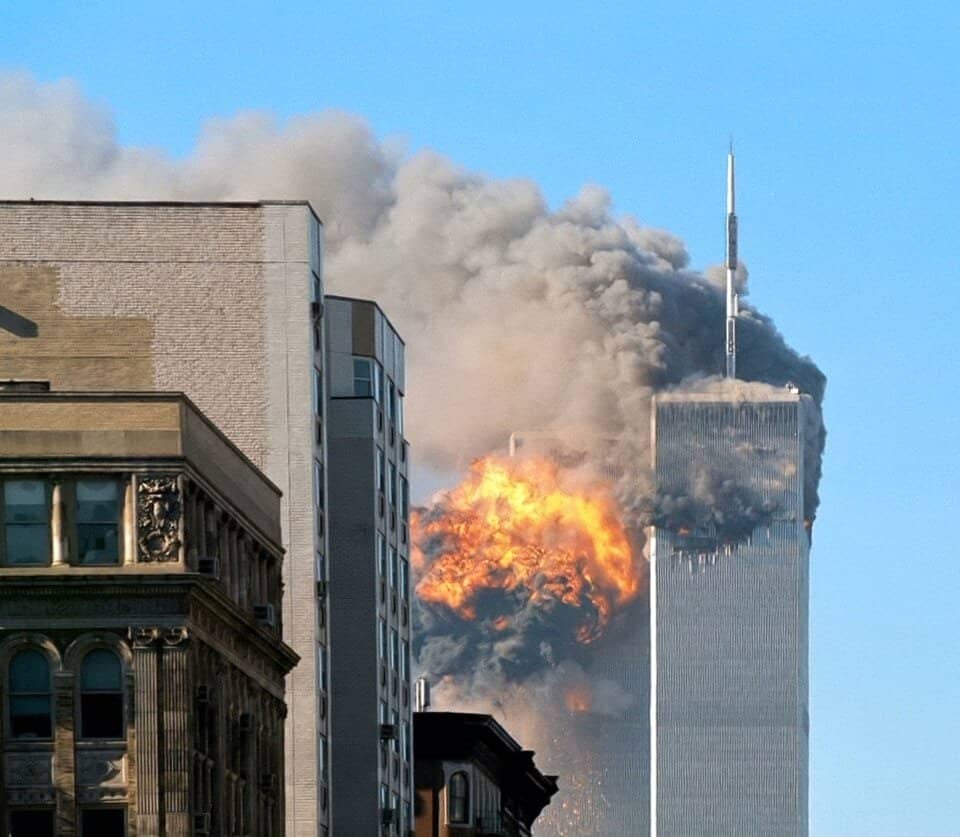
What is happening? We need to look at longer trends beyond individual crisis situations to realize that despite the increasing dangers wars pose now with more destructive weapons, there has been an increasing tendency to accept, impose, and embrace wars in many countries. Wars not only kill huge numbers of people directly, but in addition often more people die indirectly by the disease and disruptions wars bring. The Brown University’s estimateBrown University’s estimateRefers to the research conducted by Brown University’s Watson Institute for International and Public Affairs, specifically their ‘Costs of War Project,’ which quantifies the human and economic costs of post-9/11 wars. of direct deaths caused by the War on TerrorWar on TerrorA term used to describe the international military, political, legal, and conceptual campaign launched by the United States and its allies following the September 11, 2001, terrorist attacks. stood at 0.9 million, but when indirectly caused deaths were added, the number increased five times to 4.5 million.
The costs would be even higher if we estimate all the life-saving efforts that were sacrificed at the altar of increased military expenditure (less than one percent of which is spent on peace efforts globally, with a declining trend). If we also add the environmental costs of wars and the costs caused by the neglect of life-threatening serious environmental problems in a world distracted by war and conflict, the costs of wars become so high as to make precise estimation difficult. Also, if we estimate the costs of even a single war that can go horribly astray to become a nuclear war, then the high costs escalate almost beyond imagination, let alone precise estimation. Still, it may be mentioned that a thermonuclear weaponthermonuclear weaponA type of nuclear weapon that uses a secondary stage involving nuclear fusion to create a much more powerful explosion than a fission-based atomic bomb. Often referred to as a hydrogen bomb. attack in a densely populated city can burn and kill millions of people in minutes, not hours.
In terms of direct and indirect costs, inflicted and potential ones, wars pose an existential threat and the drift towards increasing wars must be checked for humanity’s survival. This is the most essential aspect of any efforts to seek a better and safer future for children and youth.
While increased engagements of world’s leaders and diplomats for ending ongoing wars and avoiding future ones are of course needed, these cannot be adequate by themselves for creating a future without wars, as past experience has shown. In addition we need world-wide efforts with continuity to create a strong base for peace, which will help to reduce wars as well as violence in daily life.
Beyond the nearly half a million recorded cases of homicide annually at world level, there are hundreds of millions of cases of physical interpersonal violence (and an even higher number of cases of serious emotional violence), each of which causes significant pain and, in many cases, leaves a longer-term harmful impact on mental and physical health. There must be a strong peace movement in all countries and regions which strives to reduce this violence while at the time creating wider conditions of peace in which existing wars, civil wars and conflicts can end soon and new ones can be avoided.
The core effort of the peace movement should be to reduce violence in daily life as well as to prepare more and more people for demanding a future without wars.
The peace movement should spread as widely as possible the idea of nonviolence as a way of life, as the most desirable and creative way of life, which nurtures life and its beauty instead of destroying it. As living on the basis of nonviolence reduces people’s distress and stress in amazing ways, many will be motivated to work for the wider cause of creating a world without wars.
These peace efforts must be visible at all levels in participative and creative ways but more particularly in community organizations, spiritual organizations and educational institutions. If such efforts can be sustained on a large scale in thoughtful and creative ways with great commitment for the next five years, building further on existing efforts but also adding much that is new and more inspiring, then a strong base for peace can be created.
Disclaimer:The views and opinions expressed in this article are those of the author(s) and do not necessarily reflect the official policy or position of The Rift.