Opening The Rift
therift
© 2026 The Rift. All Rights Reserved.
THE ARCHITECTURE OF MEMORY: TRAUMA, PARTITION, AND THE INDIAN REPUBLIC
Every community that carries historical trauma faces a choice. Memory can become a warning against repeating the past. Or it can become a justification for perpetuating the divisions that produced the original catastrophe.

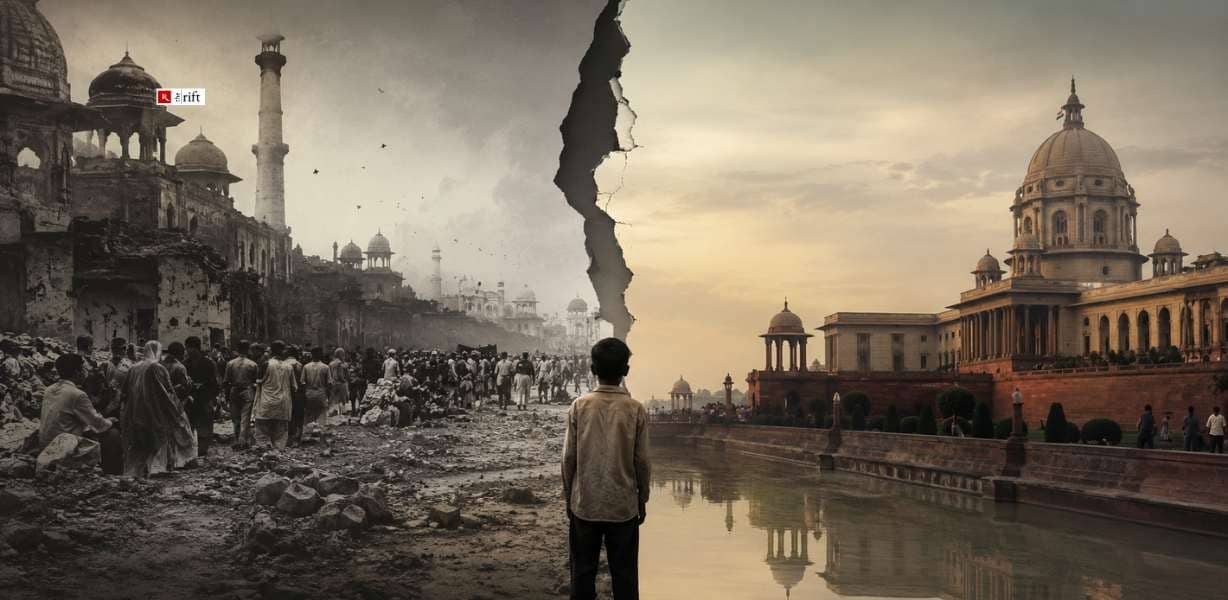
Image is Only Representative
Key Takeaways
1 of 3
Automatically generated. Read full article for complete context.
Part 1
The history of modern India is not merely a history of institutions, elections, constitutions and governments. It is also a history of memory. Nations, no less than individuals, carry wounds. Some heal and become scars. Others remain open, shaping perceptions long after the original injury has passed. The tragedy of South Asia is that one of the greatest catastrophes of the twentieth century remains not only a historical event but also a living psychological presence.
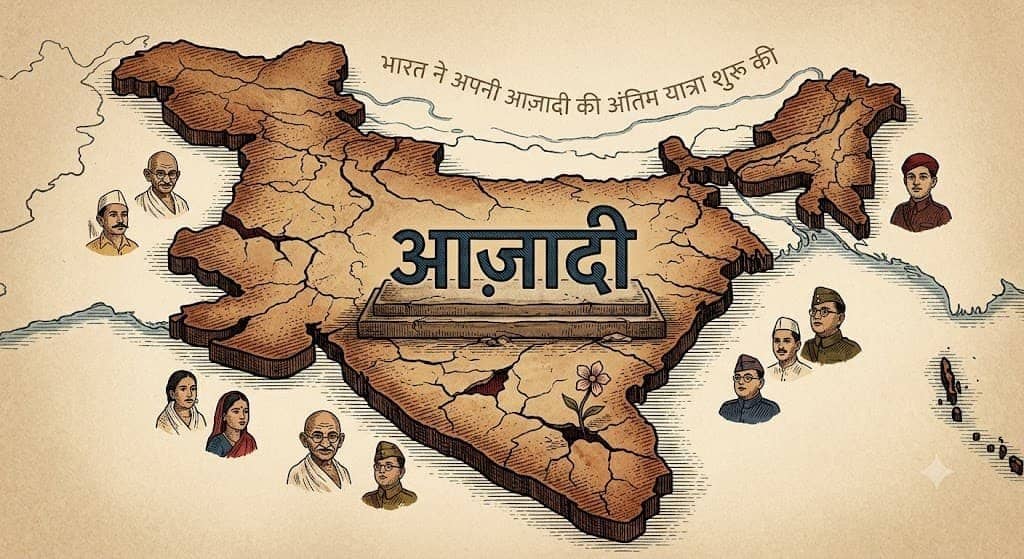
The Partition of India in 1947 displaced nearly fifteen million people and claimed hundreds of thousands, perhaps millions, of lives. Villages that had existed for centuries vanished almost overnight. Families were uprooted. Women were abducted. Entire communities were subjected to violence on a scale previously unimaginable. The event left physical borders across the subcontinent, but it also left invisible borders within the minds of those who survived it.
The persistence of Partition memory is not merely a matter of politics or ideology. It is increasingly understood as a psychological phenomenon.
The pioneering psychiatrist Vamik D. Volkan introduced the concept of what he termed a “chosen traumaChosen TraumaThe shared mental representation of a massive, catastrophic event in a group’s history that becomes central to their collective identity..” A chosen trauma is not simply an event remembered by a community. It is an event that becomes central to the community’s understanding of itself. The catastrophe acquires symbolic significance far beyond the suffering of those who directly experienced it. It becomes a defining story through which subsequent generations interpret their place in the world.
Volkan observed that large groups often preserve the memory of collective humiliation, defeat, or victimisation long after the original event has passed. The trauma remains psychologically active because the process of mourning is never fully completed. Historical loss is transformed into contemporary identity.
The descendants inherit not only memories but emotions. They come to experience fear, grievance and insecurity arising from events they never personally witnessed. Political actors then acquire a powerful resource. By invoking the historical trauma, they can reactivate feelings of threat and mobilise communities around narratives of victimhood and survival.
The scholarship emerging from Holocaust studies confirms this phenomenon. Natan Kellermann demonstrated that trauma frequently passes from survivors to their children through stories, silences, parenting styles, emotional communication and inherited perceptions of danger. Yael Danieli expanded this analysis by showing how entire family systems become organised around traumatic memory. Children often assume the role of custodians of suffering. They inherit obligations to remember and, in some cases, to vindicate.
More recent work by Rachel Yehuda has explored possible biological and epigeneticEpigeneticsChanges in organisms caused by modification of gene expression rather than alteration of the genetic code itself, which can potentially be inherited by future generations. dimensions of trauma transmission. While aspects of the science remain debated, the broader conclusion is increasingly difficult to dispute.
Human beings inherit history not only through books and monuments but through families, emotions and social structures.
The implications for India are profound.
The millions who crossed the newly drawn borders of Punjab and Sindh carried with them memories of slaughtered relatives, burnt homes, forced migration and communal terror. These memories entered family narratives. Family narratives became political identities. Political identities became instruments of mobilisation.
The grandson sitting today in Delhi, Amritsar, Jaipur or Jalandhar may never have seen Partition. Yet through decades of stories repeated around dining tables and family gatherings, he may experience the catastrophe as something immediate and personal. The event becomes what sociologists describe as cultural memory. It remains alive because it continues to shape the imagination of the living.
No historical comparison illuminates this process more vividly than the memory of KarbalaBattle of KarbalaA 680 CE military engagement in which Imam Husain and his followers were massacred, remaining a foundational trauma in Islamic history..
In the year 680 CE, on the plains of Karbala, Imam Husain ibn Ali, the grandson of the Prophet Muhammad, and a small band of companions were massacred after refusing allegiance to the Umayyad ruler Yazid. Measured solely by military significance, the event was minor. Yet fourteen centuries later it remains among the most influential memories in human history.
What makes Karbala unique is not merely the event itself but the extraordinary institutional architecture developed to preserve it. Through majlis gatherings, marsiya poetry, noha recitations, matam rituals and annual commemorations, successive generations ensured that the tragedy would remain emotionally present. Mourning became a form of communal identity.
The memory crossed every conceivable boundary. It survived empires, migrations, revolutions and technological transformations. Today millions who possess no genealogical connection whatsoever to seventh-century Arabia nevertheless experience Karbala as a living moral reality.
The significance of Karbala lies not only in its endurance but in the dual possibilities that it reveals.
At its highest, the memory of Husain serves as a perpetual reminder that power must never prevail over justice and that moral courage sometimes demands sacrifice. At its worst, any inherited grievance can be transformed into a source of exclusion and hostility.
The lesson extends far beyond theology.
Every community that carries historical trauma faces a choice. Memory can become a warning against repeating the past. Or it can become a justification for perpetuating the divisions that produced the original catastrophe.
This distinction is becoming increasingly important in contemporary India.
Recent years have witnessed recurring controversies surrounding the symbolic ownership of public space, historical monuments and cultural memory. Hyderabad provides a particularly revealing example. Disputes concerning Charminar, competing claims over historical narratives, aggressive religious symbolism and the circulation of provocative communal content through social media increasingly reflect a broader national pattern. Historical memory is being drawn into contemporary political competition.
The constitutional significance of these developments does not lie in the fortunes of any particular political party. Electoral victories and defeats are temporary. The deeper question is whether democratic societies permit inherited grievances to become instruments of contemporary exclusion.
When songs celebrating hostility toward a religious community become politically useful, when monuments become battlegrounds in cultural contests, and when citizens are encouraged to view one another through the lens of inherited suspicion, historical trauma ceases to function as memory. It begins to function as ideology.
The danger is not unique to India. It is a recurring feature of societies that have experienced collective catastrophe.
The Balkans, Rwanda, Northern Ireland, South Africa and the Middle East all demonstrate how historical suffering can either generate reconciliation or reproduce conflict. The determining factor is not the intensity of the original trauma. It is the moral and institutional framework through which the trauma is remembered.
This brings us directly to the central constitutional question confronting India.
The Republic was born amidst Partition. The men and women who framed the Constitution were not detached observers of communal violence. They were witnesses to it. They understood more clearly than any subsequent generation the destructive power of inherited grievance.
The question therefore becomes : what constitutional answer did they provide?
The answer is found not in contemporary political rhetoric but in the founding vision of the Republic itself. The framers consciously rejected the proposition that religious identity should determine political belonging. They chose citizenship over communal affiliation, constitutional fraternity over inherited antagonism, and a shared future over competing memories of the past.
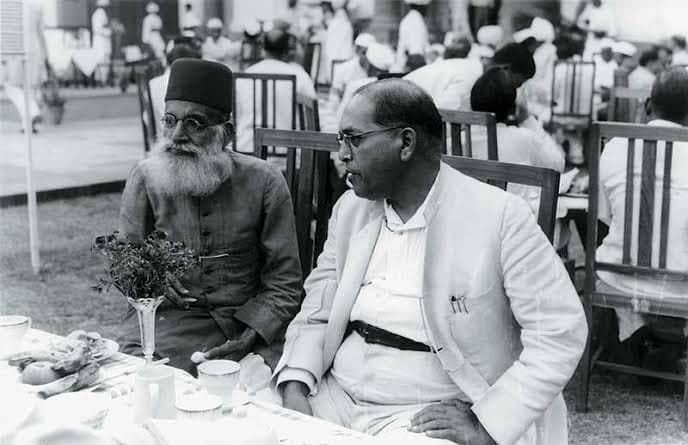
To understand that choice requires returning to the Constituent AssemblyConstituent Assembly of IndiaThe elected body that debated and drafted the Constitution of India between 1946 and 1949. itself and to the extraordinary constitutional imagination of Nehru, Azad and Ambedkar.
This is Part 1 of 3 in a series on the evolving constitutional history of India. We return to the Constituent Assembly Debates (CADs), Nehru, Azad, and Ambedkar in Part 2.
Jai Hind
Disclaimer:The views and opinions expressed in this article are those of the author(s) and do not necessarily reflect the official policy or position of The Rift.