Opening The Rift
therift
© 2026 The Rift. All Rights Reserved.
The Military-Industrial Complex: Fanning the Flames of Perpetual Wars
The military industrial complex is the only entity in the world which fears peace, not war.

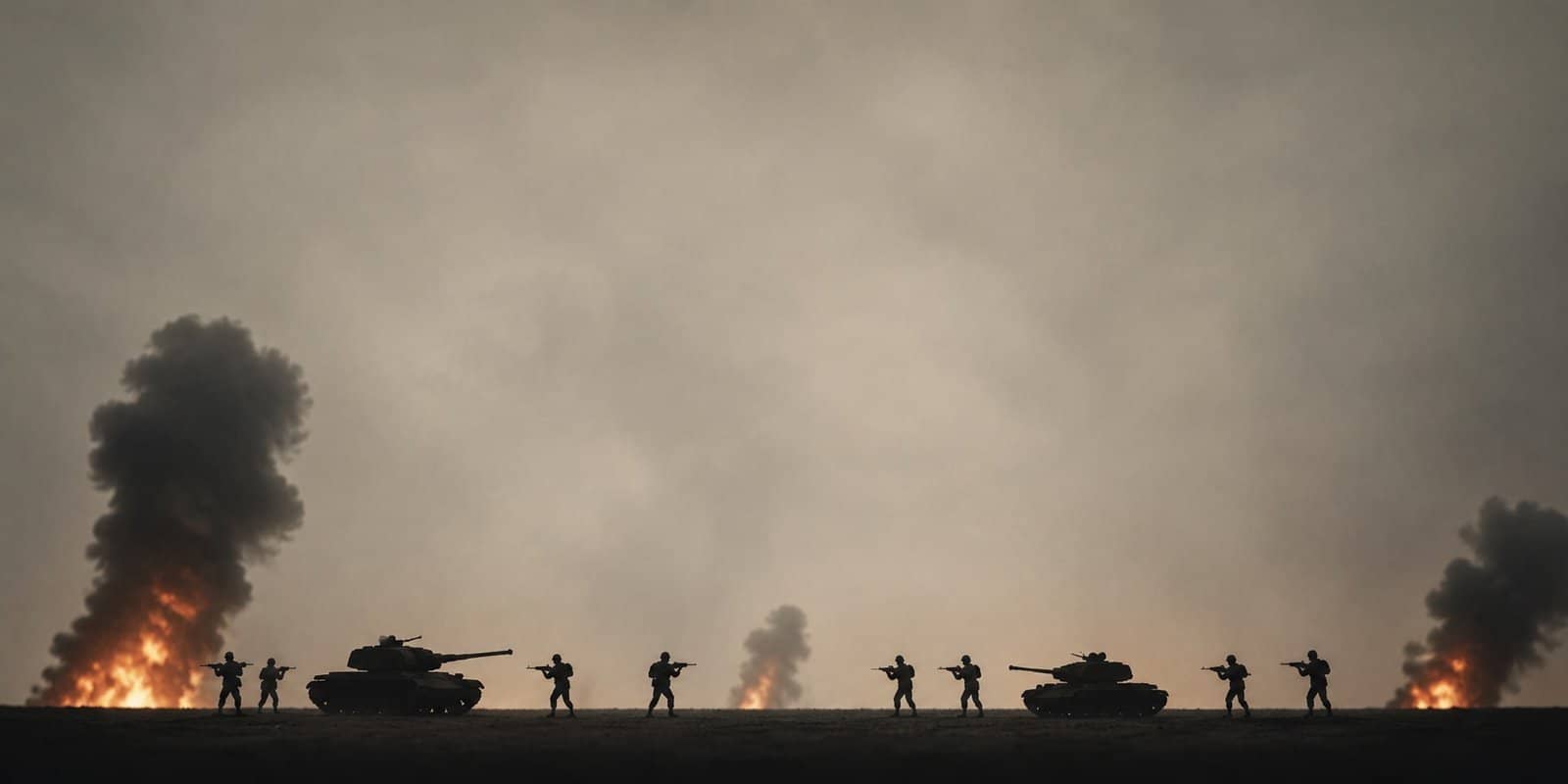
(Representative Image)
Key Takeaways
1 of 3
Automatically generated. Read full article for complete context.
We are happy when some citizens who are for peace gather for a few hours on a single day to protest against an ongoing or impending war. However, the monstrous war machine works on a huge scale day and night throughout the year, 24x7x365. Who will check this? Stopping this monster machine, or at least reducing its pace of work or giving it some sense of responsibility, is of the highest importance today when it threatens the very survival of humanity and indeed of most life on earth. This clearly requires that the numbers of those who stand and work for peace should grow rapidly by many multiples and they should be able to work with continuity.
The Military Industrial ComplexThe MICA term used to describe the policy and monetary relationships between legislators, national armed forces, and the arms industry that supports them. It includes private military contractors, the Pentagon, and various government agencies. is often mentioned as the most crucial entity in this context. However this word needs to be explained more clearly. More specifically, in my understanding, there is no opposition here for ordinary soldiers who are in wars more due to force of circumstances; most of them would be as willing, if not more, to be soldiers for peace if their service terms were protected. Hence in my presentation of peaceful alternatives for world governance I do not ask for dismissal of soldiers from armed forces (army, navy or air force etc.), instead I ask for their jobs and salaries to be protected at present levels. All that I have pleaded for in my presentation of alternatives is that, after wider arrangements for stopping wars have been made, soldiers trained for wars should instead be increasingly given training and duties relating to disaster protection, including engineering works but with more emphasis on natural protections like afforestation, and also for disaster rescue work, which will be needed more in the coming years of climate change., and also for disaster rescue work which will be needed more in the coming years of climate change. In addition soldiers should get increasing duties and deployment as part of UN administered force for world peace and for ensuring that relief supplies can reach all those affected by humanitarian crisis. Thus in the vision that I have been articulating over the years, which I repeat becomes practical only after very basic decisions for ending wars have been taken, there is no loss for the soldiers of the world as their jobs and salaries remain protected but there is a huge gain for them as their jobs are turned into the most protective jobs for saving human and other life. Hence, in my vision, soldiers can themselves become the supporters and even the movers of change towards a peaceful world.
At the same time the industrial component of the military industrial complex is becoming wider, more extensive and sinister. With AI increasingly being used in more and more dangerous ways for warfare, including for nuclear weapons—ignoring the pleas of many top experts, including Nobel Laureates—a wider range of very influential high-technology companies are being integrated more closely into the military-industrial complex. Those in their leadership roles are openly boasting about their increasing military role in very dangerous situations, such as helping Ukraine’s targeting of mainland Russia’s critical targets, something that could start a world war.
A related aspect is that scientific research networks including supposedly civilian ones that are integrated with the military industrial complex are expanding. Despite the ban on biological weaponsBiological Weapons Convention (BWC)An international treaty prohibiting the development, production, stockpiling, acquisition, retention, transfer, and use of biological and toxin weapons. It entered into force in 1975., for example, several bio-research establishments relevant for offensive roles continue to receive significant military support, even though this has led to several very dangerous situations in the past. This is bad news for science and must be resisted by scientists, but it is often instead supported because of the increased funding and career opportunities it brings.
Another increasing risk is that corruption linked to the military industrial complex is getting more and more brazen, and there appear to be no limits on this at the highest levels, with some of those at the top not even bothering much about the allegations against them in these emerging dystopian times.
The military-industrial complex is generally understood in terms of military leadership, the arms industry and defense contractors, their supporting research establishments, lobbyists, and assets, including those in political, intelligence, academic, and media circles. In recent years the military industrial complex of many countries has expanded rapidly, particularly in the case of the USA whose military-industrial complex is much more immense and vast than that of any other country. The military industrial establishment of any leading country is capable of immense destruction, yet considered essential nationally as a means of defense against any other aggressive nation or hostile force.
However, in recent times, a debate has grown regarding whether the military-industrial complex merely provides the means of fighting wars, or whether it can, in some contexts, even become a cause of perpetually continuing wars. This question has been most frequently asked in the context of the military-industrial complex of the USA, possibly because it is the biggest military power (with a military and defense budget higher than that of the next nine countries—including China and Russia—combined) with by far the biggest military-industrial complex. However, there is no reason why, at a lesser level, such a question should not be raised in the context of some other countries as well.
More specifically, important questions have been raised in the context of the USA: as expenditure of several hundred billion dollars is involved annually, and as legally earned profits as well as illegal earnings and political contributions in this sector can be very high, has a stage been reached in which, to generate huge orders and budget allocations, the military-industrial complex lobbies to influence political decisions, discourse, and propaganda in such a way as to keep fanning the flames of perpetual wars and aggression? In other words, it is not just that wars lead to more business and profits for the military industrial complex, but rather that the military-industrial complex itself sets in motion forces which will result in more wars taking place! If true, this would be a very serious issue indeed and so we must examine carefully the likelihood of this being true.
What we know already is that in the USA alone, something over 400 billion dollars is being given out to defense and military contractors in a year. To give an idea of the amount involved, it is ten times the estimate given by the World Food Program regarding the annual funds needed ($40 billion) to end hunger in the entire world within a few years.
Within these military contractors, there has been an increasing concentration of resources such that just five of the biggest contractors receive almost 150 billion dollars in a year. These big five include Lockheed Martin, Boeing, General Dynamics, Northrop Grumman and Raytheon.
This provides enough profits for defense contractors to emerge as one of the biggest funders for election campaigns, contributing hugely to politicians and candidates of both dominating political parties so as to help create a consensus on the need for very heavy defense spending. In particular, they make more contributions to those involved in defense decisions. However, heavy defense spending has to be justified, and this is most easily justified in situations of war, proxy war, war-scare, and war-mongering., war-scare and war-mongering.
In addition, they contribute heavily to most foreign policy and defense policy think tanks where academics and experts regularly write papers and documents arguing in favor of more aggressive policies and military interventions. These papers are regularly quoted by the biggest and most prestigious newspapers and magazines, without informing readers that they were funded by weapons suppliers and military contractors. In addition, defense contractors also maintain more direct contacts with newspapers, TV, and Hollywood, influencing public opinion in favor of more aggressive policies while also creating artificially high insecurities in the minds of most people from many imagined or exaggerated enemies.
In addition, the military-industrial complex employs hundreds of highly paid, full-time lobbyists who are known to be very influential among policymakers. Many of them have, in fact, in the past held senior positions in the government, particularly in defense and foreign policy jobs, and hence know many important officials and understand well how the government system works. This also means that several government officials are softened towards leading defense contractors, knowing that they can get lucrative jobs with them after leaving their government jobs.
At the same time, many persons supported by think tanks funded by defense contractors, or even those employed directly by defense contractors, regularly find jobs with the government, particularly in defense and foreign policy sectors, adding to the influence leading defense contractors have on government policy.
Another factor is that of illegal money and corruption. The Pentagon auditsDepartment of Defense AuditsRefers to the US Department of Defense’s (Pentagon) recurring failure to pass comprehensive financial audits, indicating significant issues with accountability and transparency in its vast spending and asset management., failing time and again to properly account for most of its highly expensive assets spread over the entire world. In such a non-transparent system with layers of secrecy, it may be reasonable to expect that levels of corruption are higher than in other parts of the economy and governance. What is more, this corruption is becoming increasingly blatant and shameless, with allegations involving those at the very top being made with increasing frequency. There are allegations not just of huge pay-offs and lucrative opportunities, but also concerning those who stand to make huge money from wars while being included in international negotiations, and of war decisions being leaked or influenced in the context of huge profits being made in speculative markets in a very short time. A large number of deaths can result in a short time to enable a very few persons to make super-profits.
Once the capacity and motivation of the leading defense contractors to influence government policy is well established in legal, illegal, and grey ways, the next question is: in which direction are they likely to influence government policy, particularly defense and foreign policy? Are they likely to lobby for peace, disarmament and conflict resolution? No, certainly not. Anecdotal evidence suggests that morale is low among the leaders of the military-industrial complex during those increasingly rare phases when there is more talk of peace than war. The military industrial complex is the only entity in the world which fears peace, not war.
Clearly, the lobbying of the military-industrial establishment, in the context of policy, is most likely to be for more aggressive foreign and defense policy and more military interventions, leading to a heavier need for weapons and other resources supplied by military contractors, and also to heavier overall defense spending. The unfortunate, huge power it has been allowed to acquire, ignoring the clear warnings of Eisenhower, Kennedy, and King, is likely to be used more and more to push USA policymakers in the direction of war and conflict, thereby making the entire world more dangerous and unsafe. The greater the increasing resources and influence of the military industrial complex, the more the USA has been pushed towards perpetual wars, with one costly misadventure ending only to initiate an even more costly one. This has become a very significant risk for world peace, and the peace movement should give high priority to reducing the power and influence of the military-industrial complexes in the USA as well as in other countries.
The fact that the three most important leaders to raise their voices for a future of peace for the USA (President John F. Kennedy, his younger brother and later presidential candidate Robert Kennedy Sr., and the great civil rights leader Martin Luther King) were silenced with bullets appears to have sent a very scary message to independent voices for peace in the USA and worldwide. However, if the voices of peace are not strengthened and the war machine continues to fire non-stop, then the future of all humanity and life will be gravely threatened. Hence, the strength and willpower to stand for peace and to work for peace with justice must be found by an increasing number of people, and the worldwide peace movement must be strengthened.
Disclaimer:The views and opinions expressed in this article are those of the author(s) and do not necessarily reflect the official policy or position of The Rift.
*Military Industrial ComplexAI in WarfareDefense SpendingGeopoliticsPeace MovementUS Foreign PolicyWar Economy