Opening The Rift
therift
© 2026 The Rift. All Rights Reserved.
When Does Criticism Become A Rights Violation? The Raghav Chadha Case
The Chadha petition is not just about one politician and some social media posts. It is a test of whether a doctrine built to protect dignity can be kept from becoming a tool to suppress dissent.


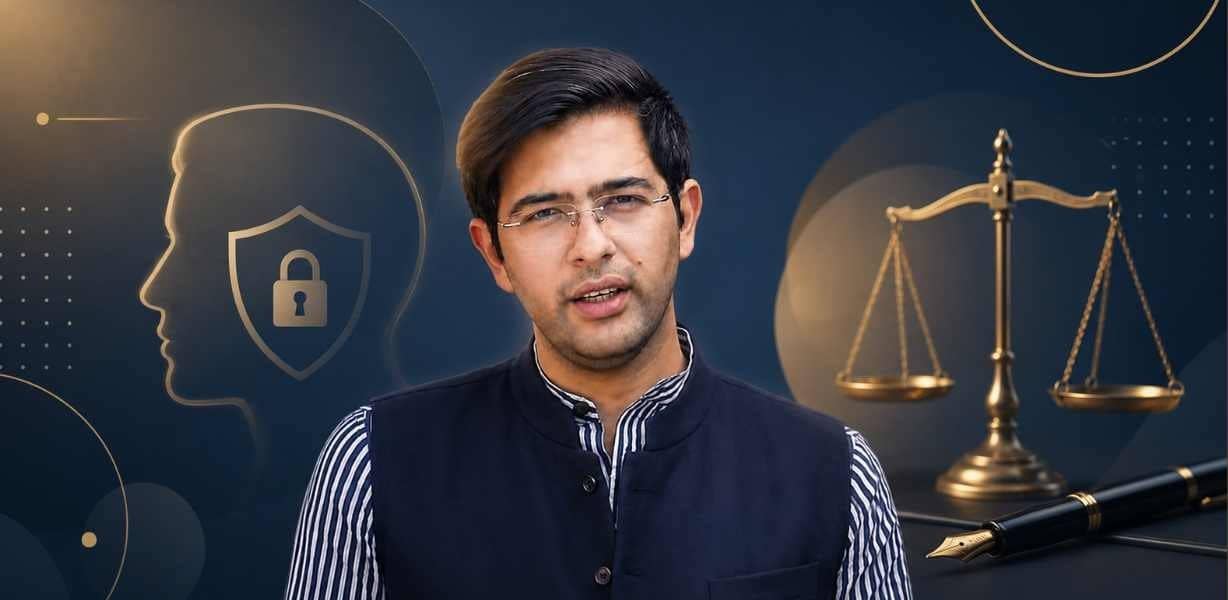
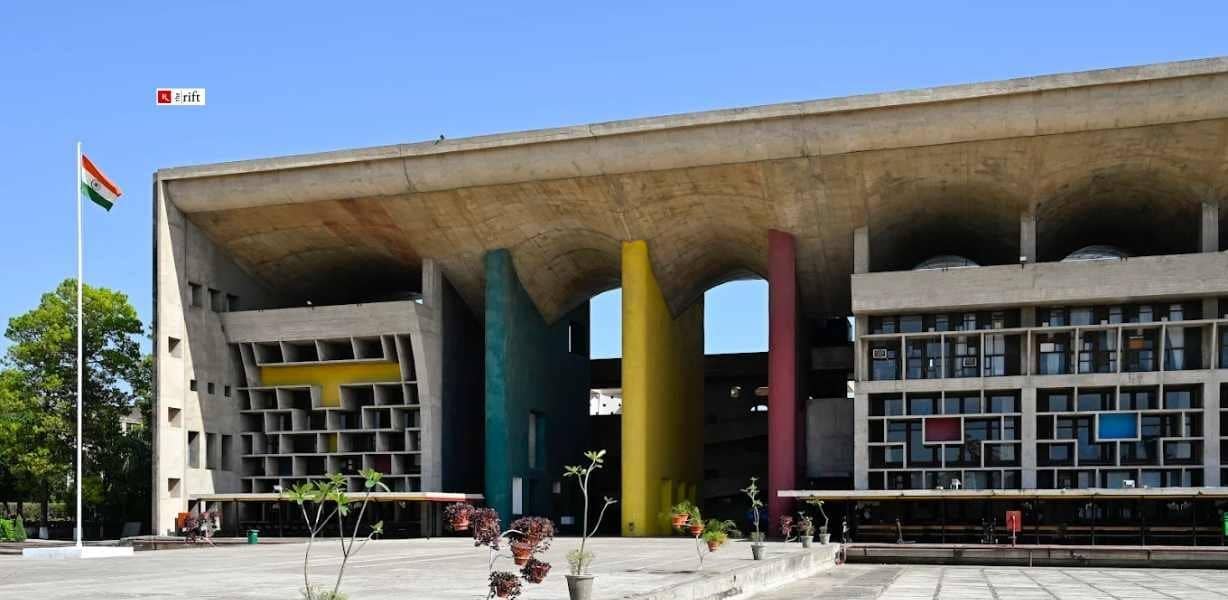
Image via Wikimedia Commons
Key Takeaways
1 of 3
Automatically generated. Read full article for complete context.
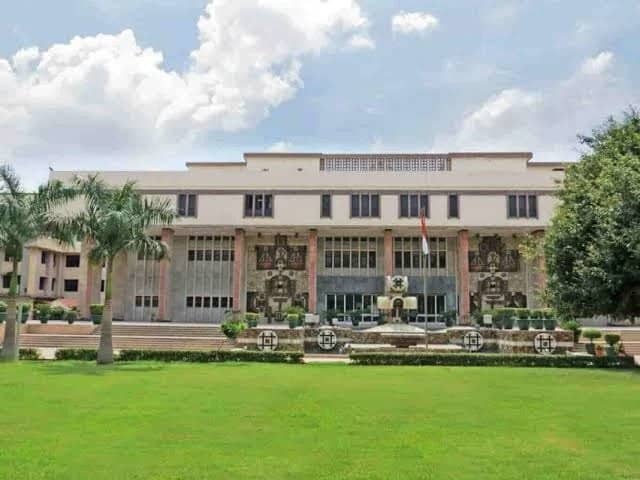
On 21 May 2025, BJP Member of Parliament Raghav Chadha moved the Delhi High Court seeking protection of his personality rightsPersonality RightsThe right of an individual to control the commercial exploitation of their name, image, likeness, or other unequivocal aspects of one’s identity. against deepfakes, AI-generated content, voice cloning and morphed visuals circulating on social media. When the matter came up before Justice Subramonium Prasad, the Court made an observation that cut to the heart of a question Indian law has been quietly avoiding: criticism of a political decision is not the same thing as a violation of personality rights. That line, drawn in an oral observation, matters more than the outcome of any one petition. It exposes the outer limit of a doctrine that Indian courts have built entirely without a statute to guide them.
The Court noted that, unlike earlier matters where personality rights were violated through commercial or unauthorised exploitation of a public figure’s identity, the content Chadha objected to appeared to be criticism of his decision to join the BJP. Posts suggesting he had sold himself for money, the Court remarked, sat closer to political critique than to misappropriation of persona. Senior Advocate Rajiv Nayar, appearing for Chadha, argued that the allegations crossed from criticism into defamationDefamationThe act of communicating a false statement about a person that injures their reputation, which can be both a civil wrong and a criminal offense in India. and pressed only for interim relief on that narrower ground. The Court reserved its order, observing that the line between criticism and defamation is quite thin. But the larger question the bench flagged stays open: what exactly are personality rights, who holds them, and where do they stop?
A Doctrine Built Case by Case
Personality rights in India have no home in any statute. The legislature has not defined them, codified them, or drawn their limits. Courts have built this entire body of law through judgment by judgment, reaching for Article 21 of the ConstitutionArticle 21A fundamental right in the Indian Constitution protecting life and personal liberty, which the Supreme Court has expanded to include the right to privacy. and reading into the right to privacy a corresponding right to control one’s identity.
The foundation comes from the Supreme Court’s 1994 decision in R Rajagopal v State of Tamil NaduR Rajagopal v State of Tamil Nadu (1994)A landmark Supreme Court judgment, popularly known as the Auto Shankar case, that recognized the right to privacy while ruling that the state cannot impose prior restraint to stop the publication of a life story., where the Court held that every individual has the right to control the commercial use of their identity as part of the fundamental right to privacy. The Delhi High Court built on this in ICC Development (International) Ltd v. Arvee Enterprises (2003)ICC Development v. Arvee Enterprises (2003)A Delhi High Court judgment establishing that publicity and personality rights are inherently tied to human individuals, meaning non-living entities or event organizers cannot claim them., recognising a distinct right of publicity and holding that the commercial value of a person’s identity belongs exclusively to that individual and cannot be misappropriated without their consent. The Supreme Court’s 2017 judgment in Justice K S Puttaswamy (Retd) v Union of IndiaPuttaswamy Judgment (2017)A historic Supreme Court verdict that unanimously recognized the right to privacy as a fundamental right under Article 21 of the Constitution. then confirmed privacy as a fundamental right under Article 21, giving personality rights a stronger constitutional anchor.
From these foundations, a wave of celebrity litigation followed. Amitabh Bachchan secured an injunction against unauthorised use of his name, image, voice and likeness for advertisements and merchandise. Anil Kapoor obtained protection for his persona including the word jhakaas, his voice, and his image against AI-generated misuse. Singer Arijit Singh received relief from the Bombay High Court after defendants used AI tools to clone his voice and drive traffic to websites without his consent. Aishwarya Rai Bachchan moved court over deepfakes used, as her counsel put it, to satisfy someone’s sexual desires. Shashi Tharoor, just weeks before the Chadha petition, secured an interim injunction after hyper-realistic videos falsely showed him praising Pakistan’s foreign policy and circulated during the Kerala election campaign.
Each of these cases involved an identifiable pattern: a well-known person’s name, voice, image or likeness was taken without consent and used either for commercial gain or to spread false information. Courts granted relief because the wrong was clear. Someone took something that belonged to someone else and used it to deceive or profit.
What The Chadha Case Actually Asks?
The Chadha petition does not fit that pattern cleanly and that is precisely what makes it important. The content he objected to did not use his likeness to sell a product, clone his voice to fabricate a speech, or generate a deepfake to spread disinformation. It used his political decision, as a public figure, to criticise him. The court noted exactly this: unlike earlier matters, here it is just criticism of decisions taken in the political arena.
This distinction matters enormously. Personality rights protect the individual’s control over their identity as an attribute of privacy and dignity. They do not and cannot insulate public figures from criticism of the choices they make in public life. A politician’s vote, a party switch, a public statement — these are acts in the public domain. Citizens, journalists and opponents have the right to comment on them, including harshly. Article 19(1)(a) of the ConstitutionArticle 19(1)(a)Guarantees all citizens of India the fundamental right to freedom of speech and expression. guarantees freedom of speech and expression, and the right to criticise those who exercise public power sits at the core of that guarantee.
The question the Chadha case forces into the open is this: can personality rights be used to silence political criticism? The Court’s initial observation suggests the answer should be no. But because Indian personality rights law has no statute and no clear doctrinal boundary, each court and each petitioner must work this out afresh. The doctrine that courts built to protect celebrities from deepfakes and commercial misuse can be stretched, intentionally or otherwise, to reach political speech. That is the danger the Chadha petition illuminates.
A Doctrine Stretched Too Far
The absence of a statutory framework has served the courts well enough when cases were straightforward. Amitabh Bachchan’s face used to sell fake products without his consent does not require a philosopher to resolve. But the Chadha petition is not a straightforward case, and it will not be the last of its kind. As more public figures, including politicians, turn to personality rights litigation to deal with content they dislike, courts will need a principled basis to draw the line between protected speech and genuine rights violations.
Three distinctions deserve to be part of that framework. First, commercial exploitation and reputational harm through false impersonation are different from political criticism. The former violates something the individual owns. The latter is what democracy requires. Second, deepfakes and AI-generated synthetic media that fabricate statements a person never made are categorically different from satire, parody and commentary that use a person’s public record. The Tharoor case belonged in the first category. The Chadha petition appears to belong in the second. Third, the public figure doctrine developed in defamation law is relevant here. Those who voluntarily enter public life accept a higher threshold of criticism. They retain rights against fabrication and commercial misuse, but they do not retain a right to be spared discomfort from political opponents.
The Information Technology Act, 2000 and the Digital Personal Data Protection Act, 2023 address some of the digital dimensions of this problem but neither creates a coherent framework for personality rights. The courts have filled that gap admirably for two decades. The Chadha case signals that the gap is now too wide for courts to fill alone. Parliament needs to enter this space and define what personality rights protect, who can hold them, what they do not cover, and where freedom of speech draws a hard boundary around them.
Conclusion
Raghav Chadha’s petition will be decided on its facts, and the court may well find that some of the content crossed from criticism into defamation. But the constitutional question the petition raises is larger than any one case. India has built personality rights law entirely through judicial improvisation, case by case, without a statute to anchor it. That worked when the cases were about deepfakes and voice cloning. It becomes precarious when the doctrine is stretched to reach criticism of political choices made by public figures in full public view.
Justice Prasad’s oral observation that criticism of a political decision is not a breach of personality rights is the right instinct. It needs to be more than an instinct. It needs to be law. Until Parliament codifies the scope and limits of personality rights in India, courts will keep drawing lines in cases like this one, individually, inconsistently, and without a map. The Chadha petition is not just about one politician and some social media posts. It is a test of whether a doctrine built to protect dignity can be kept from becoming a tool to suppress dissent.
Disclaimer:The views and opinions expressed in this article are those of the author(s) and do not necessarily reflect the official policy or position of The Rift.
*Personality RightsanalysisDefamationDelhi High CourtFreedom of SpeechIndian ConstitutionRaghav Chadha