Opening The Rift
therift
© 2026 The Rift. All Rights Reserved.
US-Israel striking civilian Infrastructure now in a desperate attempt to collapse defiant Iranian State
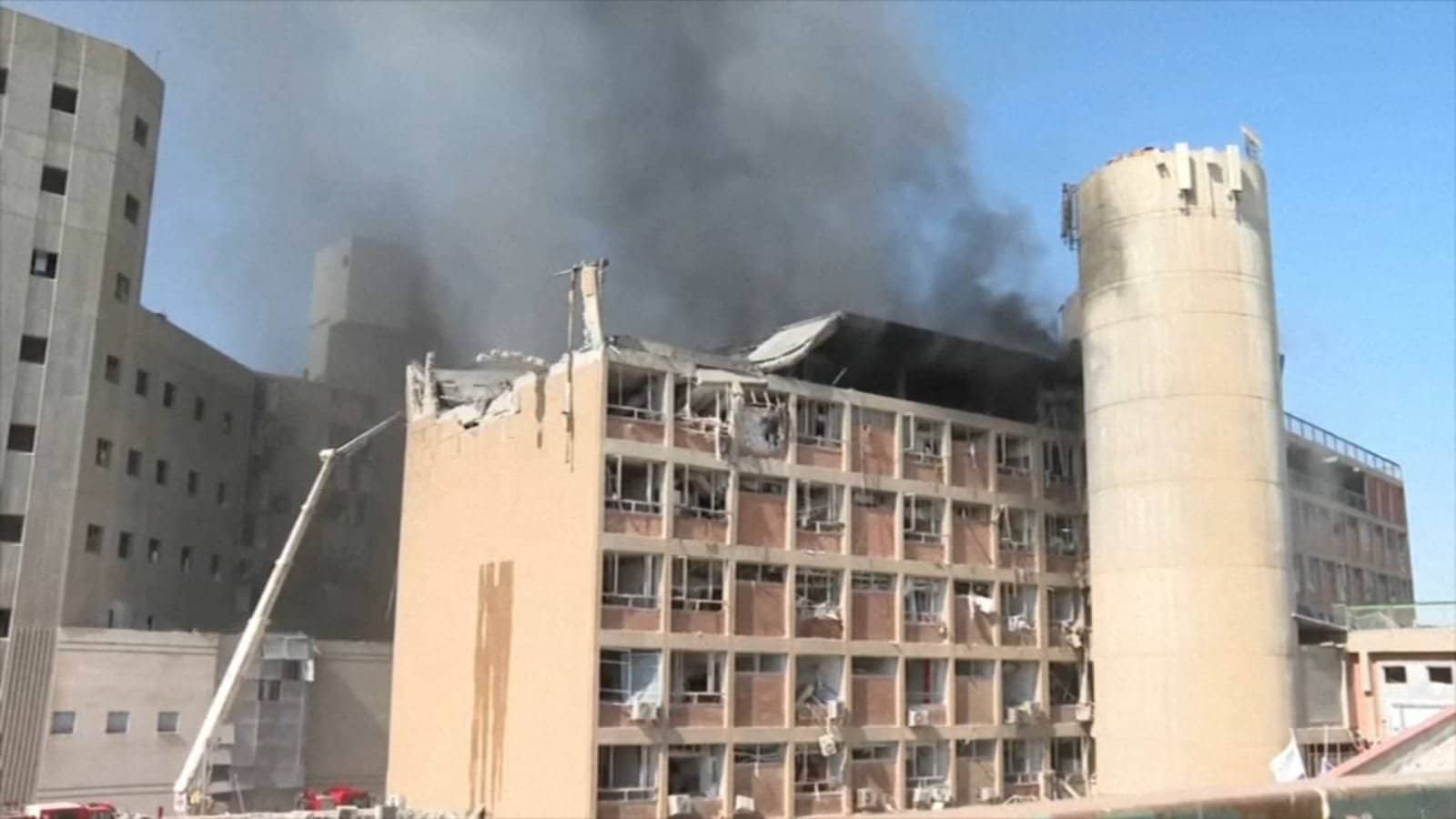
The military campaign by US-Israel in the Middle East has definitively abandoned the pretense of surgical precision, opting instead to dismantle the foundational civilian and industrial backbone of the Iranian state.

Key Takeaways
1 of 3
Automatically generated. Read full article for complete context.
As the ongoing conflict in the Middle East grinds through its second month, a profound and terrifying shift in military doctrine is unfolding in real time. We are no longer witnessing a mere exchange of fire between militaries. The recent wave of US Israel Iran infrastructure strikes reveals a calculating strategy designed not just to degrade weapons systems, but to engineer the systemic, architectural collapse of a functioning state.
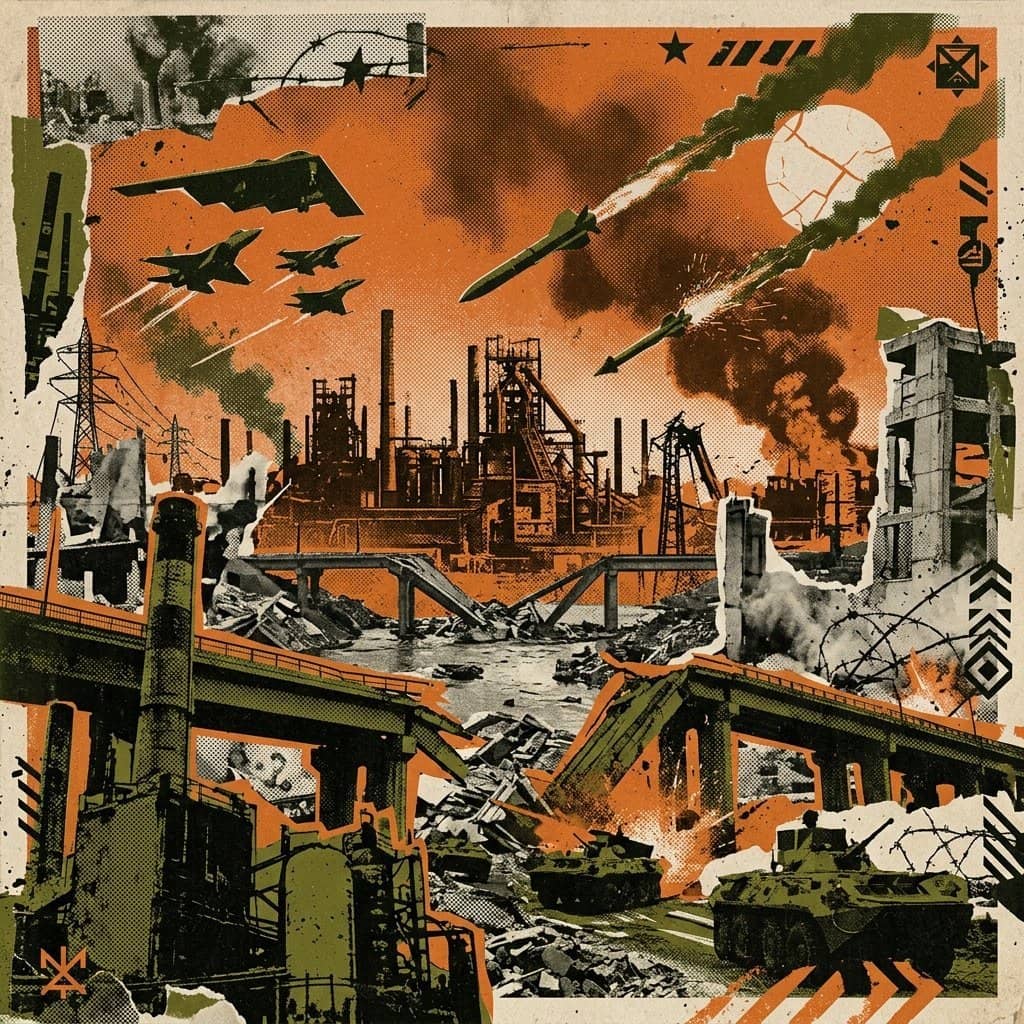
President Donald Trump openly declared several times that allied forces would continue to hit the country extremely hard for another two to three weeks. While leadership often relies on muscular rhetoric during wartime, the actual targeting parameters on the ground tell a much darker story about what “extremely hard” actually means. The crosshairs have moved decisively away from isolated command bunkers and missile silos. The new targets are the industrial, medical, and logistical veins that keep a civilian population alive and moving.
Recent sorties have systematically dismantled major civilian heavy industry. The Mobarakeh Steel Company in Isfahan, one of the largest industrial complexes in the region, was heavily struck, effectively halting production. The justification is that steel produces military components. By this logic, any factory that shapes metal is a valid military target. The destruction rapidly cascades into the medical sector. Facilities like the Darou Pakhsh Pharmaceutical Manufacturing Company have been hit under allegations of dual-use biological potential.
Transportation arteries are equally compromised. The deliberate destruction of heavy transit infrastructure, including the B1 bridge in Karaj, effectively paralyzes civilian movement and domestic supply chains while nominally attempting to sever the transfer of military hardware.
The Economics of Demolition
Destroying an enemy’s military capacity is the textbook definition of war. Destroying an enemy’s water, power, transit, and medical capacity is the textbook definition of a siege and war crime.
The strategy relies on a rapid, unrecoverable shock to the system. By simultaneously knocking out heavy industry and isolating logistical routes, the attackers create a cascading failure. A state cannot field an army if it cannot cross a bridge, but more dangerously, a state cannot feed or treat its citizens if its factories are burning. The ensuing chaos is not a byproduct of the war; it is the central mechanism of it. It forces the state to redirect all remaining resources inward just to prevent total societal breakdown.
The global consequences of this strategy are immediate and harsh. As the conflict escalates and Iran reacts by strangling the Strait of Hormuz, global energy markets have violently destabilized. Oil prices predictably spiked, exceeding $110 per barrel in early April. The ripple effects are already tearing through international economies, driving up the baseline cost of everything from transportation to food production.
The Normalization war crimes
What we are watching is the dangerous normalization of war crimes disguised as counter-proliferation. When a steel mill or a medicine factory is flattened because it might theoretically support a war effort, the distinction between a combatant and a civilian vanishes entirely. The attacking forces are fully aware that an adversary cannot rebuild its offensive capabilities if it lacks the basic industrial capacity to manufacture girders.
This marks a grim evolution in modern geopolitical conflict. The doctrine no longer requires the costly and politically lethal commitment of a ground invasion to change a regime. You do not need to occupy a country to break it. You simply dismantle its ability to function as a modern society from the air. By destroying the industrial and civil infrastructure, US-Israel attempting to ensure that whoever governs the rubble will be too busy managing internal collapse to project power outward.
As the international community issues predictable, toothless warnings about the region standing on the edge of a wider war, the reality is that the wider war has already arrived. The systematic erasure of a nation’s industrial capacity guarantees that long after the last missile is fired, the devastation will continue to claim lives quietly, through collapsing bridges, shuttered hospitals, and ruined supply lines.