Opening The Rift
therift
© 2026 The Rift. All Rights Reserved.
How Europe can be a Natural Leader for World Peace but is denying itself this Most Beautiful Role
Despite its potential as a leader for world peace, Europe has instead become a force for war, acting as a junior ally to the USA and prolonging conflicts.

Key Takeaways
1 of 3
Automatically generated. Read full article for complete context.
Our deeply troubled world is becoming embroiled in increasingly dangerous situations. While one world-threatening war situation remains unresolved, another erupts. Many smaller wars, causing extreme distress in their own regions, also continue, while several potential conflicts lurk in the shadows. The World Peace IndexGlobal Peace Index (GPI)An annual report produced by the Institute for Economics and Peace (IEP), which ranks countries according to their level of peacefulness. It measures the state of peace across three domains: Societal Safety and Security, Ongoing Domestic and International Conflict, and Militarisation. noted in its latest report for 2025 that as many 78 countries are engaged in a conflict beyond their borders.
In such a situation, it is important for more peace opportunities to be created. While everyone should contribute, someone must play a leading role to advance these efforts, and Europe appears to have significant potential to become a leader for world peace.
Among its many assets, the European Union and some of the leading European countries hold a position of prestige for a large number of people globally, which can help Europe assume a leading role for peace. Most countries in Europe are already united in the European Union which enables them to advance several peace issues more quickly. Additionally, Europe, through relations involving people, scholars, statesmen, activists, experts, etc., can more easily create a wider consensus on important peace issues involving several other countries such as Canada, Australia, New Zealand, and to a certain extent, the USA.
Europe boasts very high levels of education; hence, it should be easier to foster greater public consciousness regarding the dangers of war and destructive weapons. Based on this understanding, a wider and stronger peace movement for avoiding wars and for disarmament could emerge.. Europe has both the resources and the talent for creating the world’s best peace organizations.
As a region with high levels of education, scientific and technological development, Europe stands to benefit greatly in a world centered on peace, stability and development. On the other hand, its dense population makes its citizens more vulnerable to wars and heavy bombing.
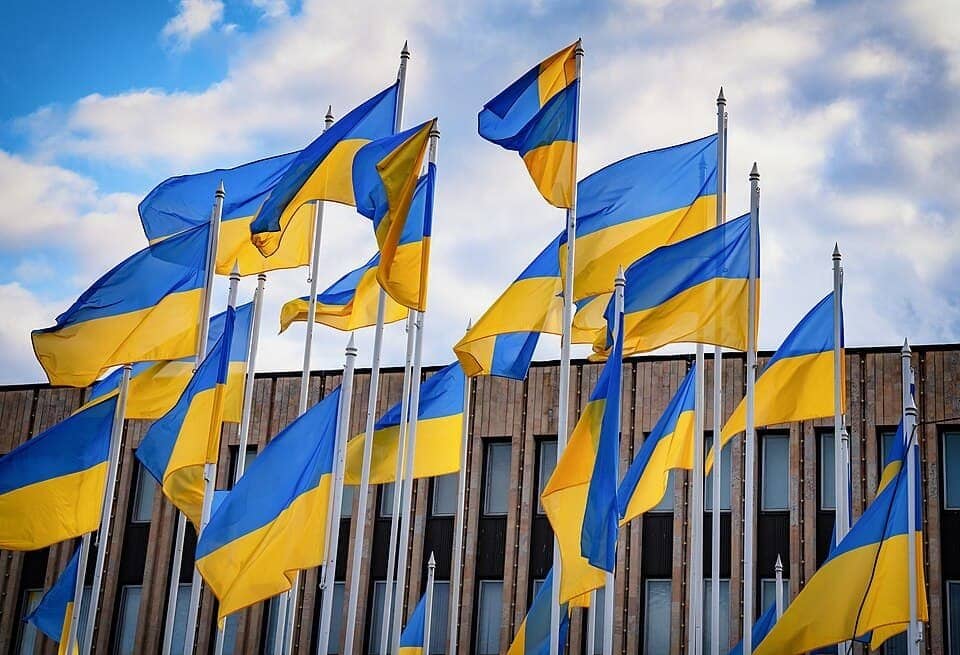
Unfortunately, despite such obvious strengths, advantages, and reasons for emerging as a leader of world peace efforts, Europe has not been able to live up to this potential at all. Instead, Europe has largely served as the junior ally (some have even used words like ‘vassal’) of the USA, seeking to extend and maintain its hegemony and dominance over the world. This has, in turn, led to the involvement of several European countries in unjust wars, thereby becoming a force for war rather than peace., of the USA seeking to extend and maintain its hegemonyHegemonyLeadership or dominance, especially by one country or social group over others. In international relations, it refers to the geopolitical dominance of one state over others. and dominance over the world, leading in turn to the involvement of several European countries in several unjust wars, hence becoming a force for war rather than peace. In the context of the Ukraine war, Europe—including the UK, of course—has played a role in aggravating and prolonging the conflict, obstructing peace opportunities such as the Istanbul peace negotiations that emerged at a very early stage of the war. In fact Europe’s biggest damage to world peace has been its constant hostility towards Russia, ignoring the economic and peace benefits that would undoubtedly come with friendly relations. These relations were much cherished by Russia for several years but were largely ignored by Europe.
More recently, with increasing emphasis on militarization by several European countries, particularly Germany, the demonization of Russia and Putin was stepped up. The reasoning was that the more this threat appeared, the stronger the support that could be drummed up for increasing military budgets. This provided an incentive to leaders, pursuing a highly distorted logic, to increase military and intelligence aid to Ukraine to hit more targets in mainland Russia.
Before this happened, the possibility of Russia attacking one or more European countries were remote. However, following increased military aid to Ukraine, such possibilities have actually increased, raising the chances of direct confrontation between Europe and Russia—something which, under worst-case scenarios, can prove destructive in unprecedented ways. Europe’s policy in this context has been one of falsely crying wolf for so long and to such an extent that a wolf that did not exist earlier may have actually appeared now.
Why did Europe reject the path of being a leader of world peace, choosing instead a very different path that has significantly increased the risks of a very destructive war for Europe?
Europe spent a long time and a lot of effort creating the democracy and democratic institutions to enable it to make the best and most well-informed choices. Then it somehow proceeded to ignore the best options and chose the worst and most high-risk ones.
Europe must seriously introspect and find out what went wrong. Can it belatedly still take corrective action? The possibility of this can increase if a sincere and unbiased peace movement in Europe can become stronger and achieve a more visible and effective presence with continuity.
Disclaimer:The views and opinions expressed in this article are those of the author(s) and do not necessarily reflect the official policy or position of The Rift.